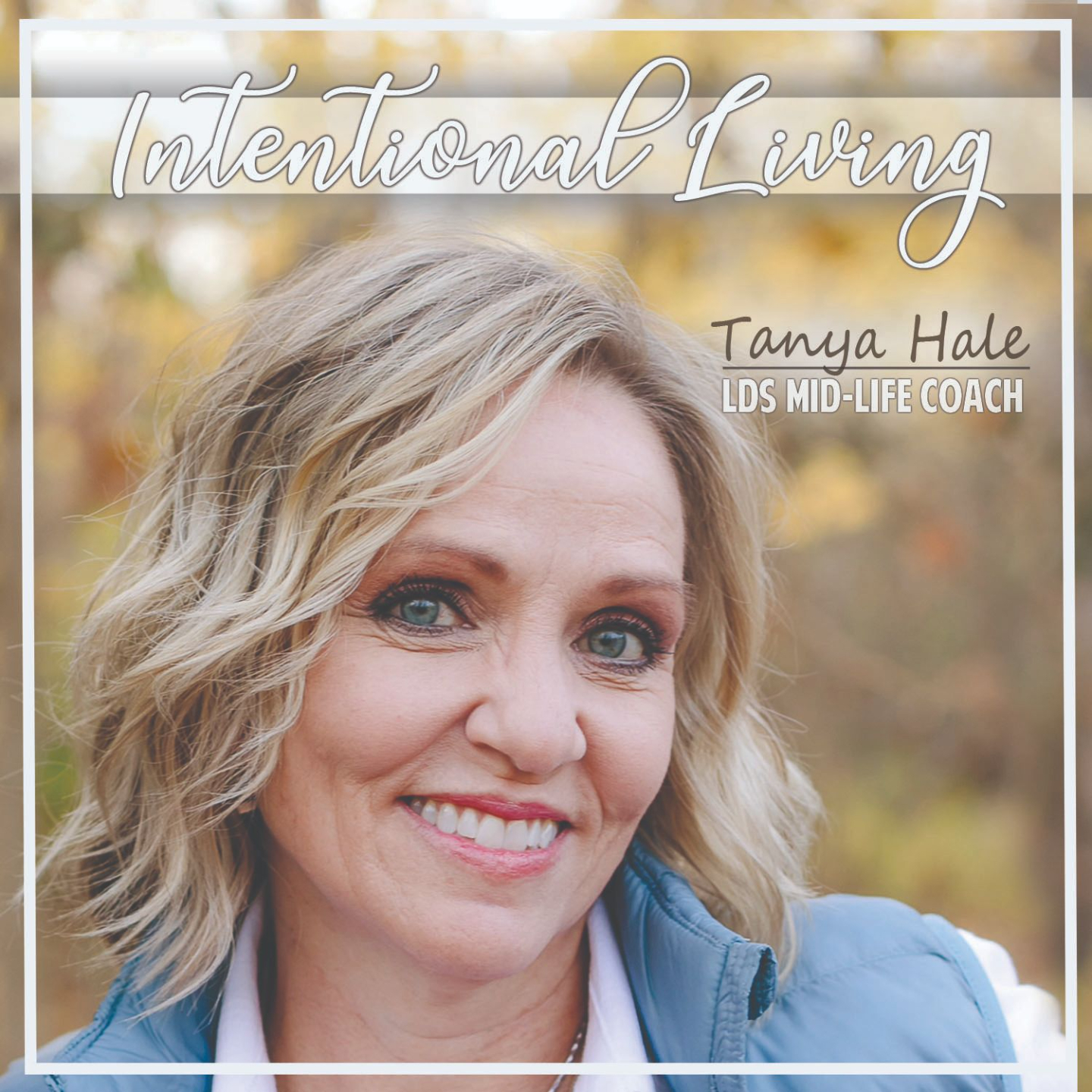
Intentional Living with Tanya Hale
Episode 419
Greatest Hits- Boundaries Part 1
00:00
Hey there, welcome to Intentional Living with Tanya Hale. This is episode number 419, A Greatest Hits Issue, "Boundaries, Part 1." Welcome to your place for finding greater happiness through intentional growth: because we don't just fall into the life of our dreams...we choose to create it. This is Tanya Hale, and I'm your host for Intentional Living.
00:24
Alright. Hello there, my friends. Welcome to the podcast. So glad to have you. As we get started today, I want to let you know that my next Talk with Tanya is July 14th. That is a free webinar that you can sign up for. You can come get coaching. You can just listen to other people get coached. You can ask me questions. We can have discussions about things that you want to talk about, whatever. It's just a kind of a free-for-all and it's super, super fun. And it just lasts for an hour. So if you're interested in that, you can go to tanyahale.com. You can go to the group coaching tab and you can click on the Talk with Tanya tab and you will get an email that has the link for it in. Also, the day before, you'll get another email reminding you of it. And an hour before, you will also get an email. So you're going to want to come to those. Those are just great, great stuff.
01:18
And also, I have some classes coming up. I'm going to do another Sense of Self class that just is so requested by all the people. It's a nine-week class. It's going to be starting on Wednesday, July 22nd. It's going to be a 6 p.m. Mountain, 8 p.m. Eastern. For me, here in Hawaii, it's going to be a 2 o'clock in the afternoon, which is kind of fun for me. So that's going to be starting. It'll be nine weeks starting on July 22nd.
01:45
I'm also going to be offering, starting that same day, July 22nd, two group coaching classes. Okay. So these are going to be limited to six people. There will be 12 weeks of coaching, but it's only going to be every other week. It's going to be the first and the third Wednesday of every month. Okay. So you're going to get 12 weeks. That's six months of coaching every other week. And that's going to be Wednesday nights. There's going to be a class at 7 o'clock Mountain, 9 o'clock Eastern. And there's going to be a Wednesday afternoon class. So 12 o'clock Mountain and 2 o'clock Eastern. So if you want to check those out, go to the same page, tanyahale.com, go to the group coaching tab, and you will see the options for all of those classes.
02:38
So group coaching, you do not have any preparation to do for the class, like no podcast to listen to or anything like that for the sense of self-class. There are podcasts to listen to to prepare you for the topic of conversation for the day. So you want to check those out. Those are both going to be great. I'm excited for all of those classes. So they're all going to be Wednesday starting on July 22nd, but you have three different time options. Two are group coaching and one is a sense of self-class.
03:08
Okay. And then really quick, just a reminder that as you listen to this content, and you want to learn a little bit more, go down to the show notes and you will find podcast recommendations of other podcasts you can listen to that I have done that will help expand on the information.
03:26
Okay, and with that, I am going to be doing a series of some greatest hits. For one, I am headed to Utah to spend a few weeks with my son and daughter-in-law, who just had a new grandbaby. So little Daisy, Grammy's coming to visit you, and I'm super excited about that. So this is going to free me up a little bit for that. But also, as I was thinking about which ones I wanted to do, I just thought, "oh, we have not done a good boundaries podcast for a while." So I'm going to go back and I'm going to do podcasts, three boundary podcasts that I did early on in my coaching. And as I've gone back and listened to them, I'm always like, "yeah, those are still really good and really pertinent." So the next three weeks, you're going to be getting a boundary podcast.
04:14
And so we're going to start today with podcast number seven, which is Boundaries Part one. And I think you're going to love it. So go ahead and take a listen. If you just can't wait for the next two weeks, you can go back to podcast number seven and eight and get the two next two weeks of podcasts that talk about boundaries. And also, if you want to understand a little bit more about boundaries, go down into the show notes. I have done some other podcasts about them that I am not going to be doing replays of at this point, but there will also be some good information there for you to check into. So with that, here is the podcast. Hope you have a great week and I will see you next time. Bye.
04:57
How you doing, my friends? This is Tanya and we are back for episode number seven, Boundaries 1.0. And we're going to have two parts to this because I've just got so much. In fact, if I just can't help myself, we may even go into a part three because I love boundaries. Boundaries have been such a huge, huge part of my emotional growth over the last five years or so, and I just adore them. I cannot imagine life without boundaries at this point, and I went a lot of years without them. I went a lot of years not even being aware that boundaries were a thing. I was never good at them.
05:36
Growing up, I don't feel like I really needed them that much. My family, well, you've got the regular sibling fighting stuff going on, right? But I didn't feel like boundaries were something that were crossed a lot in the home that I grew up on. And I didn't feel like I needed them. And I didn't have friends that I felt really crossed a lot of boundaries. And so it just was never a big deal. I think I was being the outspoken type of person I seem to be.
06:02
I remember one time setting a boundary. Not sure that I did it correctly, but I had babysat for somebody and it was a pretty rough babysitting job. And I ended up cleaning a whole kitchen full of stuff and folding laundry and doing all kinds of stuff. And I was pretty unhappy with the amount of money that I was paid by the time I was done. And I was probably, I don't know, 13 or 14. And I remember going back the next day and telling them that I worked really hard and that I wanted some more money. And in a sense, that was setting boundaries, right? It was saying, "hey, I am worth more than you've given me here." And again, I'm not sure that I handled that correctly or I don't know. It is what it is at this point.
06:49
But I did not have a propensity for setting boundaries. I just, it was never something that was even really on my radar. And then in my marriage, I really, really needed boundaries, but I didn't know how to do boundaries. Boundaries were, it wasn't a natural thing for me to set boundaries. And I've mentioned before that my parents, I never saw them fight. So I never saw them working through issues together. And I never saw them setting boundaries with each other. And all I saw was that they didn't fight. And so I thought my model for a marriage was that we should not fight. And so I found myself doing whatever it took in my marriage to not have contention and to not have fighting.
07:34
And with that, any boundary that I could have or should have set really got pushed to the side. I can't say any boundary. I did set some boundaries, but mostly I didn't because I was trying to avoid the drama and trying to avoid the confrontation that comes with setting boundaries, especially if you're not good at setting boundaries.
07:57
Now, boundaries don't always have to come with confrontation for sure, and that's kind of where I want to go with this today is, well, in the course of the next couple of podcasts, is talking about how we do boundaries. Why are they so important in the first place? And how do we do it? And what does it mean to set boundaries and all that kind of stuff?
08:20
So this is what I found when I was married, though. I didn't know much about boundaries. I was just always seeking to avoid conflict and confrontation. But what that tends to do over time is to just build resentment. I would feel like I was not being heard. I would feel like, you know, I was never getting what I wanted. And I can tell you that my ex-husband probably feels the exact same way because I don't think either one of us were good at boundaries. But with that resentment in my heart, it wasn't allowing for feelings of love and compassion.
08:56
So first of all, how do we know if boundaries are being crossed? There's a lot of feelings that we can associate it with the fact with boundaries being crossed. Maybe we feel pushed around. Maybe we feel pressure to say yes. We may feel ignored or misunderstood, betrayed, disrespected. We very likely feel unappreciated or violated or angry or unloved. We can feel frustrated. We can feel taken advantage of. We can have fear of confrontational conversations. I can ignore what is important to me in order to make other people feel more comfortable. I may feel restricted. That's not a happy list. But those are all signs and signals that boundaries are being crossed. When I start feeling this kind of angst and these kinds of frustrations, these kinds of feelings, I can know that something is not right, right? And that's what those negative emotions do for us. Those negative emotions let us know that something is not as it should be and we need to pay attention and we need to start looking at it.
10:01
So in all those years of a challenging marriage, both for me and for him, I learned to ignore and bury negative feelings in order to keep the peace. I didn't want to have confrontation, and so there were a lot of times that I just pretended like my feelings didn't exist. And the bulk of my marriage was in this place for me. And what that did was over time, my heart just got filled with so much resentment, a little bit at a time, a little bit at a time, a little bit at a time, until finally my heart was so full of anger and resentment that there was no room left in my heart for love and compassion for him. There was nothing left of love and compassion in that relationship. And that's not a good place to be if you're trying to have a good marriage.
10:54
But I had my first ahas about this in probably my early to mid-40s, maybe 42, 43, around there somewhere. And I was listening to a book in my car, which is what I was kind of my M.O. I am always listening to a book, but I was listening to a parenting one since we still had younger kids at that point. And they were talking about parenting, and they got to a point where he was talking about entitlement and how we entitle our kids by giving in to all of their bad behavior and letting them get away with whatever they want to. And I had a big, huge aha, probably my first, really big one. And my aha was that I realized that I was enabling my husband in a lot of ways. And I won't get into specifics with that, but this was my first indication along the lines of boundaries that really helped me to start taking a step back and looking at things a little bit more clearly.
11:51
Within a couple of months, I had started to go see a counselor to see what I could do. And this counselor really helped me start to understand that I needed to stand up more for what I wanted and what was important to me. And he wasn't using the word boundaries. Boundaries wasn't as big of a buzzword at that point. But I started to realize that I have rights and I should be able to say what I want and what I don't want. And within the same amount of time, I started to have experiences that let me know that divorce was okay. And previous to this, I was always one of those, "well, I didn't get married to get divorced" kind of people. And "marriage isn't 50-50, it's 100-100." Well, okay, those are great phrases if you've got two healthy people in a relationship and if both people are fully committed. But if you have zero healthy people or if you only have one healthy person, those are not really helpful phrases. Because sometimes divorce is an option. And marriage can't be 100-0 either, right? And I'm not saying that mine was that, but I'm just saying that there are situations where divorce was okay. And I started to come to terms with this.
13:03
So over the next couple of years, I got to the point where I felt like divorce was what needed to happen. And so I filed for divorce and that came through. About a year later, I was listening to Brene Brown and she has a presentation that she gave called The Power of Vulnerability. You can check that out from your library. And I listened to that and I listened to it again and I listened to it again and I became hooked on Brene Brown because she was the next level that I needed to really start to connect with emotionally what was going on inside of me and with the direction that I needed to go to get myself in a healthy place. Emotionally, I was not in a healthy place. I wasn't in a good, I wasn't able to have these connections that I wanted to have.
13:49
And I started to realize that in order to have the kind of relationships that I wanted to have, I needed to be more vulnerable. And this was a very necessary step. And within that vulnerability, I had to be willing to share what I wanted, what was okay, and what was not okay with me. And this was a big aha for me to start realizing that, "wow, you know what? I have a say here." And for some of you, that probably sounds really ridiculous. And some of you, you're probably going, "okay, I totally get that." Because being raised as a member of the Church, as a woman, there were a lot of feelings for me that were just like, you know what, it's my responsibility to make sure that everything is good, that there's no fighting, that everybody gets along. It's my job to make sure that the marriage works.
14:37
And so to begin to realize that I had a say and I needed to have a say and I needed to have a voice was huge for me. Probably within that time, after listening to Brene Brown, I started to understand about boundaries. And that was when I really first started to put the word boundaries into my vocabulary and start to use it. And vulnerability as well. That's the first time I started using that word. But I had an experience about a year and a half after the divorce where somebody was, well, I'll just put it out there. Somebody was taking me to court. And I was really, really frustrated with this situation. And I was headed to the temple. My sister was in the car next to me. And I just was talking to her. And I was saying, "okay, that's just it. I'm just going to do this because I don't want to deal with it. I don't want to deal with the fight. It's not worth it to me." And I was just exasperated and I was done. I'm like, I'm just going to, basically, I'm just going to lay down and just give in to everything because I don't want to deal with it.
15:41
And I got to the temple and we were sitting through the session that, for those of you who are not familiar with The Church of Jesus Christ of Latter-day Saints and our temples, we just have an opportunity to go there and to make covenants with God and learn a little bit more about God's plan. And as I was watching this movie that talked about God's plan and what was going on, I kept having these experiences where I would go, "wow, God just set a boundary right there." And 10 or 15 minutes later, I'd go, "huh, God just set another boundary right there." And that happened to me five or six times in the course of that learning experience.
16:19
And I was blown away because I walked into the temple saying, I'm basically just going to lay down and let whatever happen here because I don't want to deal with the conflict. And I walked out going, no, I need to stand up and I need to do this. And it was a huge, huge turning point for me where I started to realize that it is okay if there's some conflict. It is okay for me to stand up for myself. In fact, I need to stand up.
16:50
Interesting, in other times that I've gone to the temple, I go through that and I'm like, well, where are all the boundaries? And I don't see the boundaries like I saw them before, but that one experience was just all I could see was boundary after boundary after boundary. And I know that God was helping me to know that, you know what, you need to stand up for yourself and you need to do what you need to do here. And that was a very empowering experience for me. And going through that whole process of going to court and seeing that play out was very empowering, that I didn't feel like I had just laid down and been walked all over just to avoid the conflict. And I started to become stronger and better. And as other difficult experiences have come up in the couple of years since, I've found myself even more empowered.
17:39
So let's talk, take a step back into just basic boundaries. What are some things that I learned at that time about what boundaries are? For one, boundaries are understanding what I'm responsible for and what I'm not responsible for. I'm responsible for me and not for anybody else, really. So going on, boundaries are knowing what is me and what is not me. What do I like and what do I want? What don't I like and what don't I want? And being willing to share that and tell that. That is an important part of boundaries.
18:14
Another part, what is okay and what is not okay? What, really, is okay with me about how you treat me or about things going on and what is not okay? And I have to be aware of what those are and I have to be willing to say it. And really boundaries are the way that we teach people how to treat us. And as I have better, healthy boundaries, I can do that more clearly and definitely with more clarity that people can know what's appropriate and what's not.
18:46
Why do we resist boundaries? I think for me, I resisted boundaries for a lot of reasons. Three of the biggest were, first, I had a fear of repercussion or maybe getting people upset or angry at me. I felt such a need to be a peacemaker and to make sure that I was the Christlike person in the room and that I was doing all the things that I should do, that I was afraid to set boundaries because I thought that I would be the cause of causing people to be angry or upset. Totally not the case.
19:20
Another reason that I resisted boundaries was I was so scared of losing the relationship. And I think we do that with our children. We do that with our spouses. We do that with parents and siblings and whoever else. We're so afraid that if I stand up and set a boundary, that I'm going to lose that relationship. And we're going to talk about these a little bit more in depth a little later on. But we also, I think another of the big reasons why we resist boundaries is because we have feelings of guilt and selfishness if we set boundaries of what we want and what we think is important. We feel like it's selfish, which is ridiculous. Having a voice and becoming the person that we need to become and that we are is not selfish. That's God-given. That is something that we should want to do and that we should seek to do.
20:14
And this is the thing that I found over the years, was that making decisions based on what I thought other people wanted started to breed resentment in me. And I thought that I was being loving when I was doing all these things for other people out of pressure or a guilt or a sense of responsibility. But guess what? I was not being loving. I was not doing those things because of love. I was doing them out of guilt. I was doing them out of pressure. I was doing them out of a sense of responsibility. That is not love. And right there, I was putting up a wall against having good, healthy relationships.
20:55
When we struggle with boundaries, we do what others or ourselves think we should do. Should is a word that should be striked from our vocabulary. Striked? Struck? Struck from our vocabulary. There is no should, right? And when we're doing things that we think other people think we should do and we don't feel like we should do them, it's going to start causing resentment. And this lack of boundary severely limits our ability to love. And doesn't that seem backward?
21:29
For so many years, I thought that giving in equaled love. It meant that I was selfless. It meant that I loved the other person enough to let them have their way. But that is not how it works. And that is not a healthy boundaries. Boundaries doesn't mean giving in. I mean, loving doesn't mean giving in. If we're loving out of compliance or out of guilt, we are not really loving. If we're loving out of a desire to keep the peace, we are not really loving. Because if we withhold our true selves and our true desires, we are not really loving because our whole self is not present. And honest, deeply connected relationships cannot happen until personal boundaries are both expressed and respected. That comes from both sides. And that's what two healthy people have to bring to a relationship. Expression of boundaries and respect of boundaries. And both people will do that.
22:33
I love that Brene Brown says that the most compassionate people have the strongest boundaries. And when I first heard that first year after my divorce, there was a piece of that that hit me as far as this is true, but I could not have worked through that process in my brain. I couldn't have explained it. And as I continued to learn about boundaries and study about boundaries and read books on boundaries, I started to understand what that means. The most compassionate people have the strongest boundaries. Again, that seemed counterintuitive to me. I was like, how can that be? How does that work?
23:08
But this is why. It's because the most compassionate people, they love others and they value the relationship enough to communicate clearly so there is not any misunderstanding and buildup of resentment. A truly compassionate person is always seeking to protect the relationship with clear expectations and clear communication. And even if it's challenging, that person, that compassionate person, is willing to put the relationship first. And the relationship requires boundaries. It requires 100% me coming forth and not just the good parts of me. And a compassionate person does not allow that resentment to enter into their heart because they know that that resentment is the first step toward breaking down a relationship.
24:01
And this is the thing about boundaries. Boundaries exist whether we communicate them or not. And this was a huge aha for me as well, because I'm going to express the fact that I'm unhappy with those boundaries. I may say, sure, let's go ahead and do this, but I'm going to express it in some other way. So we can either choose to communicate our boundaries directly and clearly so there's no confusion or misunderstanding, or we will communicate them indirectly and through manipulation.
24:31
And I will tell you that in the course of my marriage, I learned to manipulate, and often this manipulation was through passive-aggressive behavior. Sometimes I felt like that was the only way I could have a voice, since I was too afraid to speak up. I would say what was wanted, and then I would turn around and do just the opposite because I felt like that was how I could do it. And this is not healthy. And I could have spoken my boundaries. It's not like I couldn't have. I was just choosing not to because I felt like that was the better option. I felt like that was the option for me to have a healthy, happy marriage. And yet it was the option for me to have the exact opposite. An unhealthy and unhappy marriage was not setting boundaries.
25:21
So this is another thing that I discovered in that process was that there's a cycle that goes on with not setting boundaries that I think was really fascinating. So I want you to imagine a circle and there's four steps around this circle and it comes back around. So the first step is that we will say yes to avoid being mean or to avoid feeling guilty or uncomfortable. We don't want to seem like an ornery person, right? And so the second step, after we do that, then we allow one of our boundaries to be crossed because we're afraid of being mean or unkind. And then once that boundary is crossed, step three, I start to feel anger or resentment or uncomfortableness or guilty. And then step number four is that I end up becoming what I was trying to avoid in the first place. I get right back to that place of being mean and ornery and not being kind.
26:16
So let me give you an example. All of those years I was married, I was so afraid of divorce. And that helped to create the divorce. Okay, so my first step was that I was afraid of being mean. I was afraid of being angry. And so I would allow, step two, I would allow boundaries to be crossed. Step three, I would begin to feel anger and resentment because of the fact that I had let those boundaries be crossed. And then step four, I would blow up and I would become mean and I would become angry and I would become exactly what I was trying to avoid in step one, which was being mean and angry. And I created this whole situation because of my lack of being able to set clear boundaries.
27:04
And the thing is, what do we all want in our relationships, whether it be with a spouse or whether it be with a friend or a parent or a sibling? What do we want? We want happiness. We want openness, joy, authenticity. We want inner peace and loyalty and confidence. In that relationship, we're seeking for safety and contentment and partnership. We want clear expectations and we want to have deep connections. And this is what healthy boundaries takes us to. It takes us to all of those places.
27:39
And remember that list that we talked about earlier of feeling pushed around, pressured to say yes, ignored, misunderstood, betrayed, disrespected, unappreciated, violated, angry, unloved, frustrated, taken advantage of, fearful of confrontational conversations, ignoring what's important to me in order to make others feel more comfortable, feeling restricted. Those are the opposites of all these things that healthy boundaries invite. So though it may seem counterintuitive up front if boundaries are new to you, it may seem like that doesn't work. It doesn't make sense that by setting a clear boundary of, "no, you can't do this," or "I don't like this behavior," that seems like it would be mean. And yet it is the exact thing that has to happen for us to have a healthy, honest boundary.
28:31
So how do we do this? It's just a few basic things right up front. First of all, we have to become comfortable with saying no. We have to be comfortable with who we are and with what our wants and our desires are, what our likes and our dislikes are, and what is okay and what is not okay. And we have to be good with saying no, comfortable with saying no, and not feeling guilty for saying no. The second, we have to be able to find the power in saying yes. Because there are things that we want to say yes to. And if I say yes to things that I don't want to say yes to, then I'm taking away from my ability to say yes to the things that I really want to say yes to, right? So if I can learn to say no, I open up a whole new world of yeses for me.
29:22
Another thing that we have to do is find clear, we have to become clear on who we really are and what we value the most, and we have to start living true to this. So the more aware I am of my wants and my likes and my dislikes and my things that I don't want, the more I can set clear boundaries.
29:44
So those are three things that we can do just to start off. And we're going to talk a little bit more about that in the next section. But that is going to end part one for us today. And so next time we're going to come back with part two where we talk a little bit more about boundaries. I think I could talk about boundaries for days and never run out because I just, there's so much good stuff there and I'm such a fan of boundaries and I hope that you're starting to get a sense for how important they are.
30:11
So with that, let's go ahead and close this one up by saying that, you know what, if you want some personal help from me for anything that's going on in your life, you can go to tanyahale.com to sign up for a free 20 minute coaching session. And please, please, please, if you love what you're hearing, I would love for you to share this podcast with other people so they can learn these amazing concepts and hopefully get to a better place as well. Because all of us are on this journey together and we are here to help each other figure this out and get where we want to get so that we can have healthy, intimate relationships with the people that we love. And this is the point of boundary. So if you would share this with other people, I would really love it. And that'll do it for today. So have an awesome, awesome day.
30:58
And don't you love growing up? I love growing up. I love getting to the point where these things make sense and where I'm learning things that are really helping me to be better and happier and more content. So hope you are too. I will see you next time. Have an awesome day. Bye.
31:15
Thank you so much for joining me today. If you would love to receive some weekly motivation be sure to sign up for my free "weekend win" email: a short and quick message to help you have a better weekend and position yourself for a more productive week. Go to tanyahale.com and learn more about web coaching and how it can help you get to your best self ever. See ya.