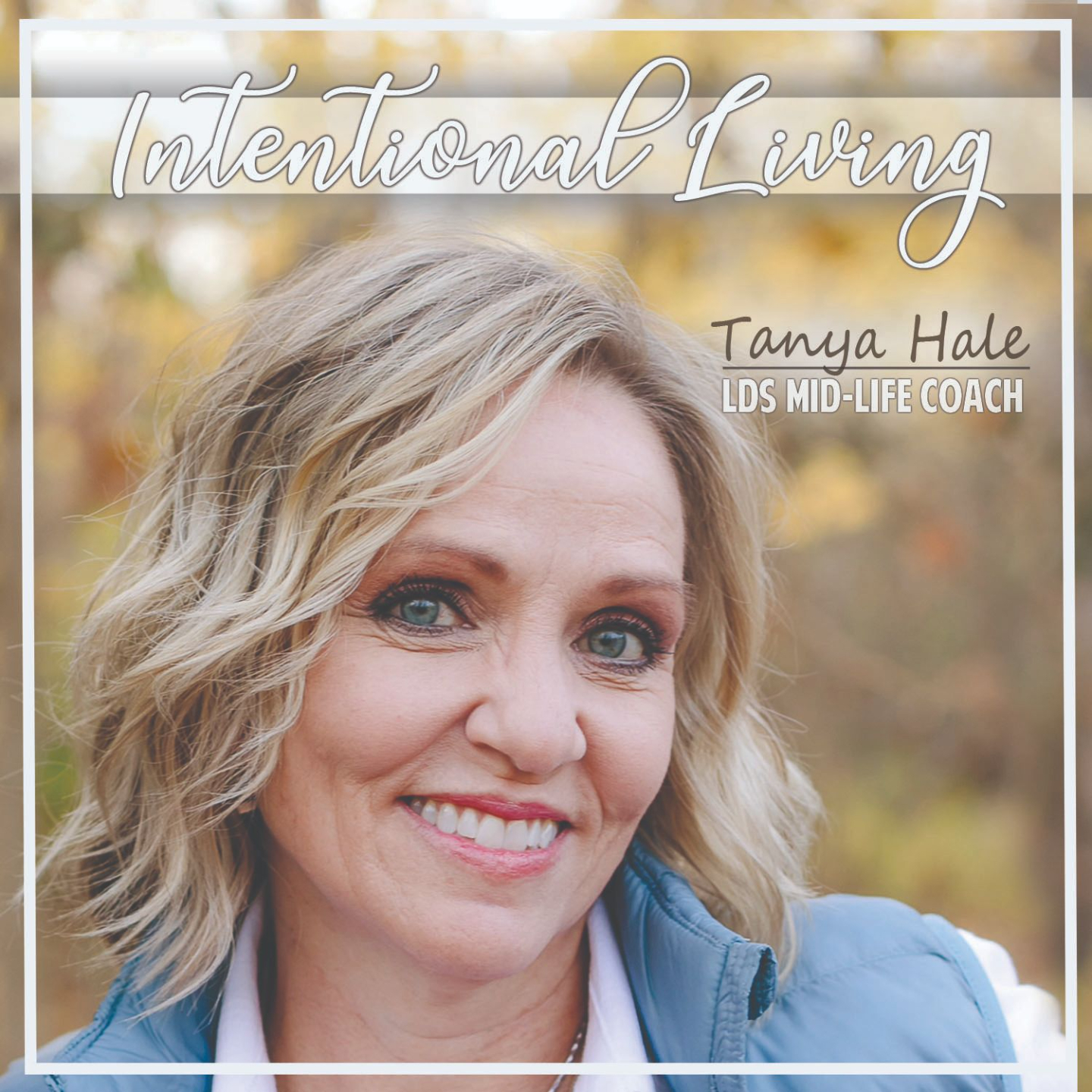
Intentional Living with Tanya Hale
Episode 417
What Leaning In Looks Like
00:00
Hey there, welcome to Intentional Living with Tanya Hale. This is episode number 417, "What Leaning in Looks Like." Welcome to your place of finding greater happiness and intentional growth, because we don't just welcome to the life of our dreams...we choose to create it. This is Tanya Hale, and I'm your host for Intentional Living.
00:22
Alright. Hello there, my friends. Welcome to the podcast. As always, just so glad to have you here and so glad to be able to share with you some content that I've been working on that I hope will give you some insight and some understanding. And I hope there's at least one gold nugget in here that you can pull out and that you can use to just give your relationships that little bit of a nudge that it needs to get closer to what you want it to be. This work that we do generally is not an overnight sensation process. It is a process that takes a lot of time and a lot of effort and a lot of awareness to get to the place where we really want to be in our relationships and to be showing up the way that we really want to. And so a little nugget at a time, a little piece at a time, we start to see and gain clarity of what's happening and what's hurting our relationships and what's helping our relationships. And we start figuring out how to show up better and better. So thanks for being here. Thanks for joining in this process. And I know you can do it. I know you can keep working and moving the direction you want to.
01:31
Before we jump in with the content today, I want to remind you that the next Talk with Tanya is going to be July 14th. That's always the second Tuesday of the month. And you can get signed up for that at tanyahale.com. Go to the group coaching tab and there will be a place for you to sign up. And then you'll get an email that has the link in it. You'll get an email the day before and you'll get an email the day of that. I'll have the link in it because it is no... if you've coached with me before it is a different link than what we use. So make sure you get that done. It's just a brilliant opportunity to get some free coaching and also to hear other people get coached. There's something about listening to other people get coached that is really enlightening for you. I listen to coaching calls all the time because the insight that I gain when it's not my issue is so enlightening. And so I just really want to encourage you to come to some of those if you would like a little bit of extra. I enjoy them and just have so much fun with those.
02:42
So the second thing, if you want to dig deeper into some of the concepts we talk about, go down to the show notes. You can find that I have Apple and Spotify and website links to several more podcasts that will help you learn and grow and figure these pieces out a little bit more.
03:02
So let's go ahead and jump into today's podcast. Today we are talking about what leaning in looks like. So last week we talked about leaning in and I hope to give you an idea of what leaning in is, what leaning out is, why it's important, and how do we start to engage in a way. And I shared with you a personal example that I'm going through right now, learning how to lean in better with Sione, as we have some different ideas about what we want to do with painting our home. And how do I choose the relationship and lean into the relationship rather than leaning out and even getting manipulative in that process? So I didn't love what I was learning about myself when I was going through that podcast, but I'm grateful for it because it does help me to progress in the ways that I want to, a piece at a time, a nudge at a time, just what we were talking about a few minutes ago.
04:01
So here's the question. How do we really lean into our relationships? How do we really invest in them? How do we give it our all and be all in? And sometimes it helps to have some examples. So today I'm going to talk about 15 ways that we and you and I can all start to lean in better in our relationships.
04:26
Okay, the first one: assume best intent. I know this is something that I work with with my clients so much. It can be easy, especially if we are not careful in our relationships, to start assuming worst intent of our spouse, to think that they are doing things on purpose to annoy us or to make us mad or because they don't care about us or something like that. And when we can learn to assume best intent of our person, our spouse in this case, right? And when we can think, "oh, I know they wouldn't hurt me on purpose. I know that they love me and that they care about me and that they want good things for me." When we can't approach any situation from that place, we are going to be showing up better. It makes it easier to lean into the relationship when we assume best intent.
05:26
When we assume that they are a jerk, that they just don't care about us, that they don't love us, that they don't want us to be happy, that they are actually intentionally trying to make our lives miserable, it does not make it easy to lean in. It makes it almost impossible to lean in because then our danger meter is going on. And so when we assume best intent, when we're in, I mean, we're not, again, we're not talking about abusive, horrible relationships. We're talking about where most of us are just in these sometimes really tough situations. We want to assume best intent. That makes it easier to lean in and to face the fear of getting hurt or the fear of not being seen. So number one: assume best intent.
06:17
Number two: we have to be willing to overcome our fears and have the hard conversations. I know that some conversations are just hard. Sione and I have only been married four and a half years. But in that time, even with all of these tools that I have, sometimes it is still difficult for me to want to lean into the hard conversations. It just feels intimidating. It feels very vulnerable. And even though he's always been very good at listening and very good at hearing me and making it safe, my brain still wants to think that if I am not easy to get along with, if I'm difficult, if I have wants and needs and desires, then he's not going to love me, right? And I just, that goes back to my previous conditioning and my previous relationships, that if I was not easy to love, then I wasn't lovable. And so hard conversations don't make us easy to love, right? Which easy to love is not my problem. Like easy to love is all in the other person's brain. But we have to be willing to have those hard conversations. That is leaning in. Leaning out would be avoiding it and saying everything's fine.
07:38
Number three: be consistent in how you show up. When we are all over the place, sometimes I do things and sometimes I don't, and sometimes I want this and sometimes I want that. It is hard to trust someone who is not consistent. We have to learn to be there and to be a safe place for our partner consistently. Now, that doesn't mean we don't all have bad days sometimes, because we do. But for the most part, I am showing up consistently. I'm showing up loving. I'm showing up kind. And when I do have a bad day or when I do like lose my focus at some point and show up, I am consistent in circling back around and in revisiting and in the repair that the relationship needs.
08:35
Number four: always be a safe place, even when you're upset. There will never be an excuse for being harsh, for name calling, or for attacking the other person. Okay. I don't care how frustrated you are, how angry you are, and I guess I'm going to add to this as well, any kind of physical violence, emotional abuse, anything like that. Never, never. Okay. Right? We need to always be a safe place. Do you get to be frustrated? Of course you do. Do you even get to be angry sometimes? Of course. That is part of being a human. All of these things are okay. But when I am angry, it is not okay for me to call my spouse names or to tell him that he's a horrible person or to tell him that he's worthless. None of that is going to work. I get to learn how to always be a safe place, even when I'm upset. I need to make it emotionally safe, physically safe. That is one way to lean into the relationship.
09:56
Number five: always follow through with your commitments. Always. Okay. If you tell your spouse you're going to do something or be somewhere, you do it and you be there. None of this just trying to get them off my back by telling them what they want to hear. That passive-aggressive approach is never going to work in creating these intimate relationships that we want. If you make a commitment to your spouse, follow through. And if you're not going to follow through, do not make the commitment. What makes you trustworthy is you following through with what you say you're going to do. And a relationship without trust is never going to be a healthy, safe place.
10:43
Number six: be on a growth trajectory yourself. Heal your own wounds. Address your triggers. Become emotionally healthy and emotionally mature. When you are cleaning up your own side of the street, when you are taking care of your struggles, your emotional immaturity places, then you are making yourself safer. You are creating a space that says, "I want to be a better person for me and for this relationship and for you." There is so much safety in having a partner who is doing their own work. Now, you can't control whether your spouse does their work, but you get to control whether you do. So be on a growth trajectory. You don't have to be going fast. You don't have to, it's not an overnight process, but be working on it.
11:49
Number seven: respect your partner's boundaries. We have got to be in a place where we honor their no. If they say "no, I don't want to do this," we don't just keep saying, "oh, come on, are you sure? It would be really fun. I think it'd be great." None of that. If our partner says, "no, I don't want to do that," we just say, "okay." And we can be sad and we can be even upset. And it is not their job to manage our emotions by changing their mind. It is our job to manage our own emotions. So when your partner says "no," when your partner says, "I don't like this," when your partner says, "I don't want you to call me names," when your partner makes any kind of request, we get to honor that as much as is possible.
12:48
Now, just because they make a request doesn't mean that we have to do it. But boundaries and requests are different as well. Boundaries are like, "listen, this behavior is not okay." When we love our partner, we work to make their lives easier, right? Like I'm a little bit of an on-time Nazi for the most part, and I get a little uptight about when we're not on time. Sione is a lot more fluid with time. He's okay being a little bit late, but because he knows that it stresses me out so much, and I have my reasons for that. That's my triggers, right, that I get to work on, because he knows that that's a trigger for me, he very mindfully steps into trying to be on time. And generally he is, right? Respecting your partner's boundaries, whatever they are. You know, you don't have to agree with them and you can absolutely have conversations to understand them. And you get to honor their no if they say no.
14:00
Number eight: set and hold your own boundaries respectfully because what you want matters and you absolutely get to request what you want, hopefully respectfully. Right? It's not like, don't tell me you're going to do this, or we're not going to do it with harshness, and we're not going to demand things. But holding our own boundaries says that, first of all, we are clear on what our own boundaries are and we ask for them when necessary. Now, not every boundary needs to be communicated, right? I don't need to walk through the grocery store and tell every person I pass, "hey, don't call me a name or don't hit me." I don't need to do that. "You can't hit me or I'm going to call the police." I don't need to do that in most cases. And very often in our relationships, there are places that we don't have to verbalize our boundaries either.
14:57
But there are times that we do. Sometimes maybe working with an adult child, we may need to say, "hey, I appreciate your love. I appreciate your concern. And this is your dad's and my situation to figure out. It is not yours." Okay, that's setting a clear boundary. And when we work with our partner, we get to do the same thing, but we want to do it respectfully. You get to set boundaries. You get to know what's okay. You get to ask people to stay in their own lanes. But we don't have to do it with anger and resentment and accusations. We can do it with love and kindness.
15:41
Number nine: learn and practice better and stronger communication skills. So much of what we talk about on here is how do I listen better? How do I understand better? How do I listen to other people's complaints better? How do I circle back around when I've made a mistake? And how do I apologize in a really meaningful way? How do I express my own concerns? How do I make requests for what I want? All of these, there are so many ways that we can approach these that are not harsh and hurtful and unkind. The more that we up our communication game, the more that we learn to speak in loving and kind ways, the more that we learn to rock the boat, but not create a tsunami, the easier it is for everybody to lean into the relationship. So when you learn and practice better and stronger communication skills, it allows you and your partner to lean in more.
16:49
Number 10: work together as a partnership to solve problems. Don't just give up and play the victim card or bulldoze them. Okay? Working together as a partner says that it's not you against me. And I talked about this last week, I believe, that it's not both of you on different sides of the table fighting each other for what you want. It's a round table. We have to scooch our butts around the table so that we're sitting cheek to cheek and it becomes you and your partner against the problem. You are working together. Listen, you're on the same team here. You both want a good, happy relationship. Nobody gets married thinking, "I want to marry somebody and be miserable every day of my life." No, we all get married hoping to find this beautiful space of love and acceptance. And we do not find that when we are butting up against each other all the time. We are partners. You both want the same thing. You just have different ways of going about it, different perspectives. Figure it out. Talk about it.
18:04
And don't just give up on solving a problem and say, "fine, you're just going to do what you want to do anyway. I never get what I want." Blah, blah, blah. Let's just get out of this victim place, right? And let's have an honest to goodness communication about what's difficult about this, this is what I want, and this is why I want it. Please help me understand what you want. Help me understand why you want it. What's behind that request? What's behind that opinion and that desire? Or just bulldozing them and saying, listen, I'm going to make the choice I'm going to make. You don't have an option, right? That's not healthy either, right? We don't want to go there. You are a team. Work together as a team. Makes it easier for everybody to lean in.
18:58
All right, number 11: prioritize your partner with your time, your behavior, your energy, and your effort. It can be super easy the longer that we are married to stop prioritizing your partner. And if you want to have a healthy, beautiful relationship that makes it easier for both of you to lean in, we have to prioritize them. Okay, prioritize them with your time. I know life is busy. I know we have things that we like to do. And sometimes we set aside the things we like to do in order to make time for our partner. Right? You may love going hiking and every night after work you want to go out for a hike and every Saturday you want to be out at six and you don't get home till six and you may want to go out Sunday afternoons. That's great. I love that you like to hike and if you want to be in a relationship. You have to be in the relationship. You have to say "I love to hike and I love my spouse and I'm going to prioritize time with them."
20:11
I get that there are things that you love to do. That's great. And if you love being married to a partner and if you want to have a good relationship, they have to be on your on the very top of your priority list. Are we prioritizing them with behavior? Are we treating them in a way that lets them know that they are prioritized? This is a way that we lean into the relationship by deciding that maybe there are ways that you're treating your behavior that you're like, ooh, I just don't love that. That's not the way that I want to be. What about prioritizing them with your energy? Are you spending all of your energy doing other things and not having anything left for your spouse? Nothing left to go on a walk after dinner? Nothing left to have some sexy time after, you know, when you go to bed or in the morning. What is going on with your energy? Are you prioritizing your energy for your partner? And what about the effort that you expend? Are you putting forth an effort to learn these skills, to prioritize your partner, to learn how to love better and be more accepting and create a safe space. When we are leaning in, our partner is a priority for us.
21:41
Number 12: be aware of and sensitive to your partner's triggers and wounds. Okay. Now, they are not yours to solve. Just as I gave the example before about me being a little bit uptight about time. It is not Sione's job to manage my triggers around being on time. It's not his job at all. And he can also be aware of and be sensitive to them as he is, as he strives to be. Ultimately, it is my job to manage my own triggers. It's my job to heal the wounds that create those triggers. And leaning in, a partner can be sensitive to what is difficult for me. Oftentimes when we start getting angsty in our relationships, we want to push buttons rather than apply a self. So be aware. Be aware of what hurts your partner, what they love, what they don't love, and seek to lean in to those things by being a help instead of a hindrance.
22:58
Number 13: make decisions that prioritize connection over convenience. Okay, as I was talking to you last week, like this place for me of wanting our house to be painted and wanting to move on that convenience would be, I want it to go fast. I want this to be over with. I want my house done, blah, blah, blah, right? Convenience. But connection means that I slow down and I go, oh, this isn't just my house. This house is both of ours. We both get a say in what we like and what we don't like. And we both get to make a decision. I get to prioritize my connection with my spouse over the convenience of doing things my own way.
23:50
In what other ways do you neglect your spouse in the name of convenience? Right? Maybe sometimes we make decisions and don't tell them that we're even making a decision because we don't want to have to manage their input. We don't want to have to manage the fact that they get to have a say. That's not okay. If we're going to lean in, we need to prioritize the connection. And connections take time. Connections take effort. And sometimes we're tired. Sometimes we just don't feel like it. And we do it anyway because that is what the relationship requires.
24:33
Okay, number 14: clean up any one-up or one-down thinking, right? You have to truly, truly see your partner as an equal. You have to be able to look at them and say, you are my equal in every way. And if you cannot say that, you have some work to do to clean up this idea that you think that you are better than them or that you think that you are less than them. Your partner is your equal. That doesn't mean you know all the same things and that doesn't mean you have the same skill sets and that doesn't mean that you want the same things, but it means that you truly see that you are both the same as far as your wants and needs both matter the same. How you want to spend money, both matters the same. How you want to spend your time, both matters the same. This person you are married to is your equal. When you see them as such, it is easier to lean in and create that space.
25:45
And number 15: show up with some clean love. Now, I'm going to put the clean love podcast back down in the show notes. This is just one of my favorites because it's a concept that changes everything when we really start to understand it. But clean love means that we just don't have expectations. I love because I want to love, because love feels good, because I choose to be a loving person. I am not showing love hoping that they reciprocate in some way. I don't say "I love you" hoping that they say "I love you" back. I don't buy them a gift hoping that they'll buy a gift back. Right? I'm not loving them doing anything in the name of love, hoping for a reciprocal behavior. Clean love just says, "listen, I'm just going to love you because I want to." Because love feels better than angst. It feels better than resentment. It feels better than anger. It feels better than frustration.
26:50
All of those feel pretty darn crappy. And love feels so good. Why would we choose all of those other things when we can choose love? And when I drop the expectations of my spouse and I just choose to love, that is me leaning in. It is me practicing learning how to love better. And when the greatest commandments, according to Jesus Christ, are to love God and to love our neighbor as ourselves, this learning to love peace is pretty darn important. I think it trumps a lot of other commandments out there when Jesus Christ says this is the first and the second greatest commandments. So show up with clean love.
27:40
If you look at one more podcast this week to understand better, I want you to do the Clean Love podcast. There's going to be a whole bunch down in the show notes, but I want you to follow up with the clean love. I think you will find a lot of insight on that one. Okay, my friends, 15 ways that you can lean in better to your relationship. If you want to learn about any of these, go down to the show notes. I'm going to have lots of podcasts that are going to touch on a lot of these and help explain them a little bit more. We have the responsibility, if I'm going to choose to be in relationship, I get to choose to be in relationship. And that means that I lean in. That means that I implement skills, that I learn skills, that I have the difficult conversations, that I don't put things on the back burner, that I don't just say, "fine, everything's fine." Like, it's not. We have to have these real, honest, vulnerable conversations.
28:52
Okay, I hope this helped you understand leaning a little bit better. This is part of growing up, my friends. It is part of creating the kind of relationship that we really desire, this connected, emotionally intimate space. You have the capacity to do this. I know you do, because if I can start to figure this out, gee whiz, I think anybody can. I was a freaking mess in my previous marriage and just did not understand so many of these concepts. And the ability that I have now to create something so different with Sione just boggles my mind. So I invite you to join me on this process.
29:34
If you want to fast track your efforts here, tell you what, one-on-one coaching is a brilliant way to fast track it because I am going to see things that you will not see. And when I see it and when I can share it with you, everything can change for you in how you see yourself and in what you're able to clean up. So go to tanyahale.com. You can click on the free consultation button and you can set up a call with me where I will coach you and then we'll talk about whether coaching is a good fit for you or not. I promise it's not a hard sales coach. That's not my style. And if you don't want to work with me, then it's not going to be a good fit. I don't want you spending time and energy and effort and money on something that is not going to help you move toward becoming your next best self. But for many of you, this coaching gig would do amazing things in helping you move the direction that you want to move.
30:41
Okay, that's going to do it for me this week. I hope you have a really, really awesome week. And please reach out if you have any questions or comments. And I will talk to you later. Bye.
30:53
Thank you so much for joining me today. If you would love to receive some weekly motivation be sure to sign up for my free "weekend win" email: a short and quick message to help you have a better weekend and position yourself for a more productive week. Go to tanyahale.com and learn more about web coaching and how it can help you get to your best self ever. See ya.