Intentional Living with Tanya Hale
Episode 406
Lessons From Our Fourth Year of Marriage
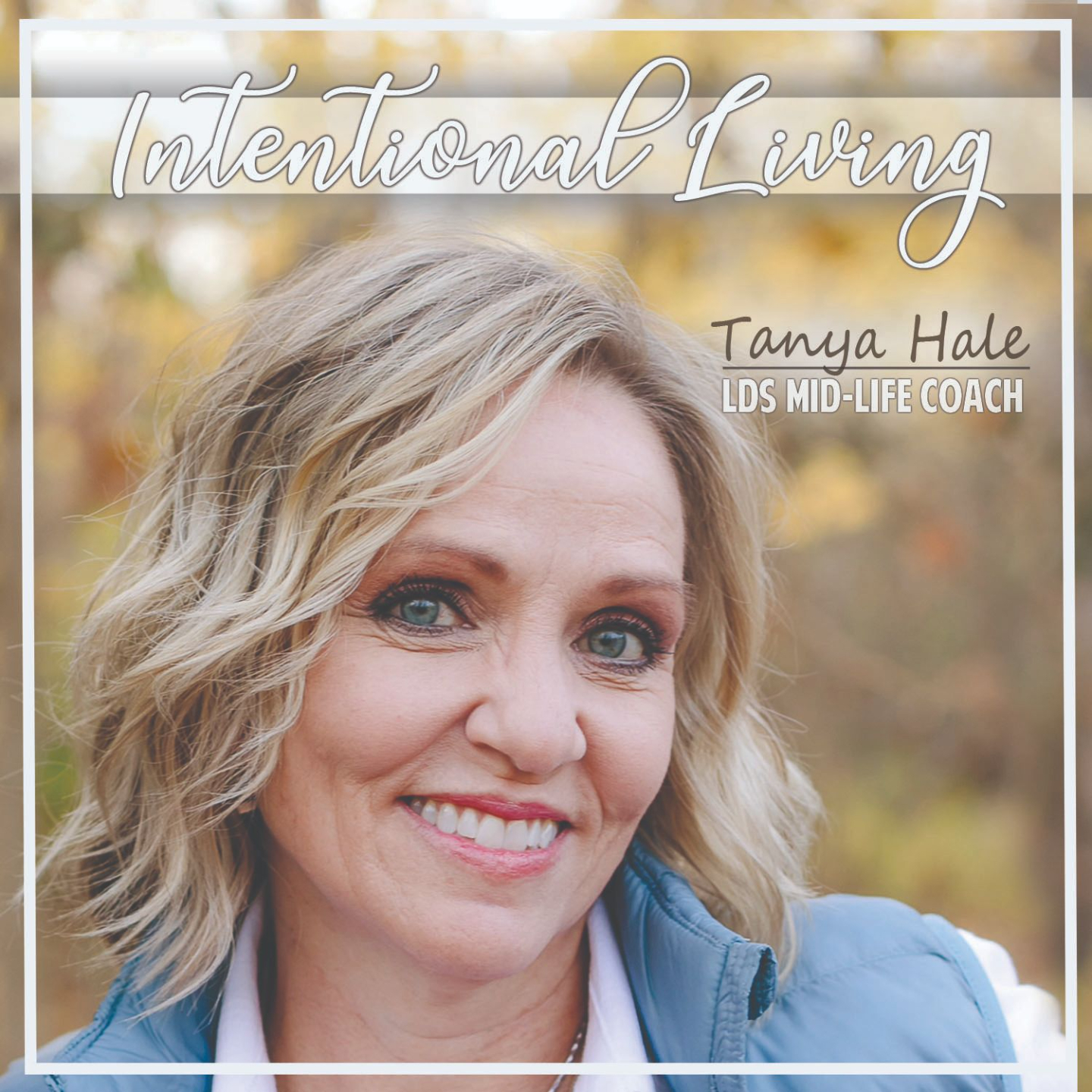
Tanya Hale 00:00
Hey there, welcome to Intentional Living with Tanya Hale. This is episode number 406, "Lessons Learned From Our Fourth Year of Marriage." Welcome to your place for finding greater happiness through intentional growth, because we don't just fall into the life of our dreams...we choose to create it. This is Tanya Hale and I'm your host for Intentional Living.
Tanya Hale 00:22
Alright. Hello there, my friends. Welcome to the podcast. So glad to have you with me today. And I also have Sione here with me today.
Sione 00:30
Hey everybody.
Tanya Hale 00:31
So we're going to do our annual lessons learned from our most current year of marriage, which for us is four. We just celebrated our fourth anniversary about a week and a half ago, right?
Sione 00:43
Something like that.
Tanya Hale 00:44
Yeah. Yeah. And we're just finally getting around to doing this one. So that's good. Before we jump into our conversation about the things that we have learned, I just wanted to remind you that if you want to come to the next Talk with Tanya, that is April 14th, it's always, almost always the second Tuesday of the month at two o'clock Eastern, 12 o'clock mountain. You do need to sign up for that on my website, tanyahale.com. Just go to the group coaching tab and you can get signed up for that. You'll get an email with the link and it's just great. We just have great conversations and talk about things that people want to talk about and do some coaching. Um, I love it. So if you want to join us there, if you can join us there, would highly recommend it.
Tanya Hale 01:29
So jumping into today, here we go. Sione is here and we are going to talk about some of the things that have really risen to the surface for us in our relationship this last year and in trying to figure out and understand it better and understand each other better. And in figuring out how can we continue on this path of creating just this beautiful, intimate relationship.
Sione 01:57
Yeah, even though we're the youngest of the old people in the world, we're still figuring each other out.
Tanya Hale 02:03
Yep, yep. And new marriage, right? Like we're only four years in. But I think that we're doing a pretty stellar job at showing up here the way that we want to and both of us showing up in very, very different ways than we showed up in our previous marriages.
Sione 02:18
So far, amazing.
Tanya Hale 02:19
Yeah, yeah, it's been really good. We just kind of keep looking at each other going like, "who gets this?" This is just pretty amazing that we have this relationship that is just so open and honest and drama-free because we don't have any backburner issues. I mean, we really, as soon as one of us becomes aware, we have these great difficult, sometimes painful discussions, but we have them right as soon as possible. Really quick in the process.
Sione 02:51
Yep.
Tanya Hale 02:52
Alright, so we're going to start together today, the things that Sione and I have talked about. The first thing we want to talk about that we have learned is that I think that we have really come to learn, let's finally start all over with that one. We have come to learn to love the other person for who they are and seeing their strengths and their weaknesses and loving that person in all their humanity without feeling the need to fix things for them or change them, realizing that they are not our project, right? The other person is not a project for us, they're just our spouse and we get to learn to love them while they work through their stuff.
Sione 03:36
Yeah, so I have some pretty impressive anxiety, especially when things start getting stressful. And it usually shows up in my personal life in traveling. So if I'm anxious about not getting through TSA, and I'm anxious about getting stopped at TSA, and I'm anxious about is the flight going to take off on time, and then is it going to be able to get to next gate on time, and do we bring enough luggage, and how fast are we walking between gates, and just all this stuff. And if you're a former member, or if you're a member of my family, and have traveled with me before, you're like, "yeah, that is exactly Sione. He does not deal well with traveling." Even though I love doing it, I'm anxious about all the things.
Tanya Hale 04:30
Well, and the interesting thing is I kind of am on the opposite end of the spectrum as far as that goes. I just don't worry about it, right? Like before traveling, if the flight's late, the flight's late. If we miss our flight, we'll figure it out.
Sione 04:42
We'll show up at the airport, and there are no tickets for us, and we thought there were. Yeah, she's like, "oh, okay," and I'm like, "what?"
Tanya Hale 04:50
Just roll with the glitches.
Sione 04:52
Right.
Tanya Hale 04:53
Right. So we did have an experience when we were traveling last year where that was exactly what had happened and and it's just interesting that I approach it so differently than Sione does and so learning how to adjust to how the other person is responding. So we did have an experience we were in Fiji, actually coming back from American Samoa last year and we thought with the time zone change and the the International date line that we crossed...we got our days wrong of when we were supposed to be at the airport and we were supposed to have the flight the day before and so we totally missed that flight. And we showed up on the day that we thought we were supposed to be there.
Sione 05:41
We changed the tickets because we realized that before but Fiji Airlines didn't change their computer system. It was a mess.
Tanya Hale 05:50
Anyway it was it was just a mess.
Sione 05:52
I had an email confirming the change but they didn't have it in their system as the change
Tanya Hale 05:57
So we showed up at the airport to get on a flight back to Los Angeles and we didn't have tickets and there were no tickets available on the flight we wanted to go and so anyway so I'm moving into my "whatever, we'll figure it out" like it's okay if we have to spend another night and we'll like work it out. And what were you doing Sione?
Sione 06:23
I was like "where are all the flights to the U.S. We have to get back to the U.S. What are our options tonight? So how can we sort this out and how on earth could you not have our tickets for tonight? Yeah. Book them. Here's the email showing it." And the reality is is there were other humans who also booked tickets on that flight and there were no seats left. So it's not like they can just throw us in the overhead compartment for however many 12 hour flight it was. So so yeah. So we we had to figure out some things and we finagled it. We ended up going into Dallas instead of L.A. and changing our tickets from L.A. to Indy to Dallas to Indy and getting a hotel in Dallas wasn't a big deal. But the process of getting all that done, that was a big deal.
Tanya Hale 07:12
Well, and I think it was not the first time that your anxiety has really surfaced, but this was the biggest that I had ever seen it surface. And so we were adjusting to that because you were really uptight and wanting to run through the airport. And I'm like, "listen, I'm not going to run through an airport." And that caused you some angst.
Sione 07:36
Yes, I'm like, "Why aren't you anxious? Get anxious!"
Tanya Hale 07:37
Yeah, and it brought up a lot of past experiences for me when in a previous life I would be left behind while somebody took off and I had two or three or four kids all by myself wrangling car seats and all the stuff and somebody else had taken off way in advance. And so it brought up that kind of angst for me as well of this taking off and being left to be responsible for everything. So it's just interesting that like he had his triggers in this situation. I had my triggers in this situation.
Tanya Hale 08:16
And when we finally got to the hotel in Dallas, we sat down and we're like, "okay, let's talk about what's going on." And I think one of the things that that process taught me in watching him work through his anxiety was, "oh, this is just part of who he is. It's part of what he works through in his brain. And it's okay. It's different than how I do it." And so now I have learned how to create a bigger space around him to do his anxiety thing. And I just stand back and go, "oh, like, how can I support you in this? What do you need from me?" And I do try to be a little less blase about what's going on, but not a lot because I kind of like that element of who I am, that I don't get really uptight. But how, what about you?
Sione 09:06
Well, obviously, it's a pattern that's been going on for years, it's not something new. I get paid really well to be anxious about all the bad things that could be happening and solving the problem before they happen and being able to think of the 50,000 ways I could solve this problem and picking the best one. And so that's in my training to think of all that too. So that pattern as well, not only is it well established, but it's also reinforced all the time in my work life to be good at being anxious and then thinking through things. And fortunately for me, anxiety doesn't shut me down. It just gets me into problem-solving mode with a little bit higher pulse than usual. So yeah, so I see your blasé as not caring and you see my anxiety is like, "ah, can you please? This is not that big of a deal." So yeah.
Tanya Hale 10:13
Yeah, but I think that space, I talked about it a few weeks ago in the the how to be a partner in marriage. I don't remember what the title of that one was, but just a few weeks ago about partnership is this space that we both bring our individual selves into the relationship circle. And Sione is not my project here. I don't need to fix his anxiety. I don't need to manage his anxiety. My job is just to let him be anxious and to create a safe space for him to be anxious and to work through it. And that, I think, has been a big aha for me this last year is like, "oh, like he gets to do that. There's nothing wrong with him feeling anxiety." In fact, as he just mentioned, there's a lot of really great things that come from from being a little bit more anxious. It works very well with the job that he has.
Sione 11:04
Yeah, well, and then also that your ability to step back and not see it as your problem also then allows me to step in and share it with you and not feel like I'm dumping my anxiety on you because I also recognize that I don't have to jump in the so being able to say, "Oh, that's just how she handles this. And she doesn't see me as the project. "She doesn't see this anxiety as something for her to fix. So I can share that anxiety with her and share that vulnerability that I'm feeling and not have that, not have you take it over and feel like I'm dumping it on you because I don't want to dump any of my stuff on you ever. But because I know you're not going to take it on, I can share it.
Tanya Hale 12:05
Mm hmm. And hopefully you also don't feel judged for it. Right? I just did like a little scrunchy face like, "do you feel judged about it?" Because we didn't talk about that piece before we jumped on.
Sione 12:17
No, I don't feel judged. I mean, I know I have it. So it's no shocker to me that I have anxiety.And it's also no shocker to me that that anxiety exudes from me like rain from a rain cloud. And so it's not. I know that I have to learn to reign that in. But being able to share that anxiety rather than keep it all bottled up inside of me until it explodes is super nice. Yeah.
Tanya Hale 12:44
And I think it's a process, too, to learn how in the moment when things are pretty high anxiety, and I'm pretty like, no anxiety, right? I think in the moment, learning how to slow down and not, I mean, it's always going to be a difficult situation, I think, especially in a big situation like this Fiji trip, right? Like there was a lot going on and a lot of money at stake and a lot of all the things. And I think it's difficult during those times not to get testy and not to be annoyed and not to throw out little passive-aggressive statements or accusations or attacking things. And I think we did a pretty darn good job.
Sione 13:37
Yeah, I don't remember if I ever threw out any passive-aggressive statements, but it wouldn't be beyond me. I'm pretty good at passive-aggressive.
Tanya Hale 13:43
Well, you weren't very happy that I wasn't going to run in the airport. But hindsight, running would not have helped.
Tanya Hale 13:52
OK, let's talk about another thing that we discovered this last year, and that is this space that really stepping into that in our marriage, vulnerability is not a weakness, but it's a strength. And it actually allows for faster and more lasting growth, I think so.
Sione 14:15
Yeah, so this is more about my anxiety because we're moving. There's a lot of things that have to happen. And so I definitely get anxious about selling the house and buying a new one. And is it going to fall apart as soon as we get there? And what are we missing and all that kind of stuff? And because I know you're not going to step into the pool with me. Again, I can share some of those thoughts and feelings with you. And then you're able to use your experience to get curious about that vulnerability, but also to say, "well, I don't think that's a thing because I was there at the house and I can tell you what it's like." Or, no, "look at what we are selling in this house. We're going to be fine." So I think that allows me to share that with you. And I don't know what else to say about it, but it allows me then to take a look at my anxiety and say, "well, where is that coming from? Like what is causing me to have those feelings?" And then I can work on that. But if it's not a safe place to share the anxiety, then it just stays inside till it gets bottled up and I don't know. But being able to share it allows you to get curious about it, which then allows me to get reflective.
Tanya Hale 15:48
Yeah. So in this case, the vulnerability comes from you being able to talk about your anxiety with me and say, this is making me anxious.
Sione 15:58
Right, which what man wants to tell his wife that he's feeling anxious about something? That's not very manly, not very masculine. I'm supposed to take care of everything and everything's supposed to just fall into place and that's my job, to be the protector and the provider. And anxiety is not in that protector-provider, anxiety is not the third part of that, but I'm good at the anxiety part. So yeah, so it's just nice to not have to be the protector and provider within our relationship. Outside of a relationship, I think that I do a pretty good job of both of those, but within the relationship, I don't have to be the manly man that never has any problems and never cries and never has feelings except for anger.
Tanya Hale 16:56
Because that's what's socially acceptable for you to feel or excitement if you're winning or losing, right? So yeah. So I just, I think this space of us learning to show up in the relationship circle, just creating safety for the vulnerability, for the different personalities and perspectives that we bring. I think that that seems to be kind of the theme today thus far, right? Yeah.
Sione 17:26
Well, and we didn't talk about this before, so I guess we can cut it out if we need to. But like you also have felt some concerns about moving so far away from all the family. And being able to share that vulnerability with me, and hopefully I haven't said, "oh, well, here's how we're gonna fix that." And I have to just be able to ask questions about your feelings instead of trying to fix your feelings. I think it shows that there's a safe place for you to share your feelings and not have me see you as a project to fix about this big move.
Tanya Hale 18:06
Well, and I love that you bring that up because if I show up vulnerable and you try and fix me or you try and tell me that what I'm feeling is not valid, that's not a partnership, right? That would be you stepping into a one-up place and putting me in a one-down place and being able to allow the other person's vulnerability and not just allow, but embrace and respect it. I think is a really important part of creating that safety in the relationship where I then don't become your project, right? Neither of us are the project.
Sione 18:50
Right. We all have pools of vulnerability, whether it's, you know, having good friends or whether it's, are the kids doing okay, or whether it's how's my business doing or whatever, we all have these pools of vulnerability in our private circle. It's not part of the relationship circle. And it's important to stay out of your circle and you to stay out of my circle, because then that is you taking on fixing something in my circle. That's totally my responsibility to deal with. And even though sometimes those pools have edges that approach the relationship circle, or maybe even are in the relationship circle, it's important not to.
Tanya Hale 19:32
Or even that we want to bring those things to the circle and lay them out on the table. And like I can bring my stuff from this business to the relationship table and put them on the table. And the expectation for me is that I can put them out there so that I can see them so that you can see what I'm working through, but not for you to step in and try and fix it or solve any problems or anything like that.
Sione 20:00
Yeah. Which I think leads us to that next one that we wanted to talk about, because I now have an example.
Tanya Hale 20:09
Oh, okay. Oh, so learning how to be self-aware. Okay. Give us your example.
Sione 20:14
So, the next one is learning how to be self-aware is kind of a process. It's not really a switch that you flip on and off, but it's a journey that you take. And I think that for me, kind of as you're, you know, building and managing your business and working your business, I will sometimes make comments about how I think you should build and manage your business, despite me having zero experience at running or managing a business. And also picking a career where somebody else says, show up at this time and there'll be people waiting for you, customers waiting for you, I haven't had to build a single business whatsoever. I mean, we call them patients in medicine, but it's the same thing. So yeah, so learning that I'm stepping into your, like this is your business, not my business. And learning how, where I'm crossing lines and stepping into your lane on the business side of things has definitely been a process because I usually just think I'm being super helpful. I'm not jumping into your lane, but I justify it by saying, oh yeah, she just, she's asking me for help and she's asking me for my advice, which you're totally not, but I'm perceiving it that way. And so being self-aware of going, "oh, I totally just trampled over her lane and completely cut her off." Like that was not very nice of me. And so being able to be aware of that, I think I'm becoming better at it sometimes.
Tanya Hale 22:04
And I've noticed for me, this self-aware being a process, I've noticed that my, like you move into anxiety, I move into avoidance more often, right? So that kind of becomes my go-to. So when you start giving me unsolicited advice about my business, I just emotionally kind of back off and shut down. And I used to think that was a problem, but I think in the last couple of months, I've started to realize, oh, right, that's not a problem. That's just my emotional regulation. It's my body doing what it needs to do to be in a good place where I can manage. So I back off, I get my brain where I want it to be, I breathe, but then the reason I don't think it's a problem is because I don't stay disengaged. Then I'm willing to step back in.
Tanya Hale 22:54
And so for me, the avoidance is not the problem. The problem would be if I stayed in an avoidance state. So the fact that I back off, I go, okay, catch your breath, regroup, recalibrate, and now I'm gonna step back in. I think that's a perfectly acceptable way to manage my avoidance. Not that I'm not going to avoid because that becomes, it's a very protective measure of my brain that it's going to happen without a lot of awareness, just like your anxiety is, right? And I think it's the same thing. We haven't talked about this either, but here we go. But I think it's the same thing where you get to go, oh, I'm moving into anxiety and that's not a problem, but I want to be aware of it and I want to step into working with that anxiety in a way that feels productive for me. I'm gonna step back in and manage it.
Sione 23:50
And putting that in the coaching model, for me at least, I say, oh, anxiety is now the circumstance, right? Not the feeling. So now what thoughts am I having that are leading to this circumstance of anxiety? And then what thoughts can I have about the anxiety that will move me to a better feeling? Oh, I'm feeling anxious. Okay, good. That means I'm going to start doing some solutions and some problem-solving. Okay, I feel empowered because I know now I'm in 100% problem-solving mode, and I'm going to come up with 15 different solutions to this problem that's led to that anxiety. And then it changes things around for me. So then once the results show up, then I go, okay, good, anxiety is no longer in my circumstance.
Tanya Hale 24:36
And he just did a really fancy trick with the thought model. And that sometimes a feeling like anxiety is almost always going to show up in our feeling line, because it's created by a thought or it might even just be created by our nervous system trying to regulate, right? Like that kind of stuff going on. But then if we just say, "oh, I'm feeling anxiety," and we make that a circumstance, oh, it's a fact, I'm feeling anxiety, then we we can put that feeling in our next circumstance line and say, "okay, I'm feeling anxiety. What do I want to think about that? Oh, of course, I feel anxiety. It's a problem solving skill for me. It's one of my superpowers to be able to problem solve." And then rather than a spinning out of control with the anxiety, you're able to, that's kind of doing the same thing I talked about step back in, right? You stand back, you gather your brain, your feeling, your thoughts, whatever you get, you get yourself in a space where you want to be, and then you're able to step back into this situation.
Sione 25:40
Yeah, I think they've shown that there are lots of high achievers that have different things that we might call problems, dyslexia, or, you know, they don't, they don't read at a high level or whatever, but that then allows them to develop some other part of their brain that nobody else is even thinking about. And so it gives them a superpower because of that. And so I think that's the same with anxiety for me. It gets me into problem solving mode so quickly. And so it's useful. And so I think, oh, good. I'm in anxiety mode. This means that my brain is going to really start clicking on how to fix the problem. Good job, anxiety. Yeah. And now, okay, problem solved, right? You can go away now because nobody around you likes and you see on it.
Tanya Hale 26:27
Well, because the the anxiousness is one level of discomfort, right? There's a discomfort that comes with that but that can be it. But when we start layering on shame, oh, I shouldn't be feeling anxiety or disappointment in ourselves then we started layering on all of these other difficulty motions onto the anxiety. And that's when it then becomes multiplied in difficulty, but if we can just keep it the clean, they call this clean and dirty pain, right? The clean pain is the anxiety. It's difficult. It's uncomfortable, but let's keep it clean. The dirty pain is then when we start feeling shame and disappointment and frustration and anger and self-loathing when we start layering all that stuff. That's all called dirty pain.
Sione 27:17
And it may be, and your anxiety may be perfectly justified or may not be justified, but the thoughts that you're feeling about it are going to be the most important part of that.
Tanya Hale 27:28
Because the anxiety is fine, like that's not a problem. Lots of us have it, turns out. Turns out, right? And I probably have it just in different ways, but I've never really labeled it as anxiety. But I will say that we had an experience just in the last couple of weeks where I was feeling some stress. I don't know that I would label it anxiety. That feels big for me, but I was feeling some stress with the selling of this house.
Sione 27:54
And anxiety is more a pattern of feeling stress and you can have stressful moments and yeah, they raise your heart rate and all that stuff, but anxiety, I think is different.
Tanya Hale 28:03
Okay, that makes sense. And this kind of leads us to our next lesson that we've learned, or that we've really been able to incorporate more this last year, which is this space of a lot of grace. A lot of grace for ourselves, a lot of grace for each other. We have done a really spectacular job of not moving into a lot of passive aggressive statements, even though we're both superheroes at being able to be passive aggressive. Like, that was something I was so good at in my previous marriage, and we would have won gold medals, probably, but I think as we stepped into this relationship, we did so very intentionally with keeping that clean and not letting that infiltrate our relationship much. And I think we've done a pretty good job not making offhanded, spiteful, digging comments to each other.
Sione 28:54
Well, and I think that because we haven't, when it does show up, it's like, whoa. Yeah.
Tanya Hale 28:58
Yeah. Yeah. It feels very awkward and uncomfortable. So we were just selling this house a few weeks ago. I'm currently in a contract, which we're excited about. But house went up for sale on Thursday, but nobody could come see it on Friday. And so Friday morning, we're getting ready to leave the house. I was leaving on a trip. It was like four o'clock in the morning. We had to get to the airport super early. We had to have the house completely clean so that people could walk in. And we had spent three or four days, I mean, just really doing a great job getting it done. But that morning we had to leave with no personal effects out, none of this stuff. And I kind of became the self-appointed baby.
Sione 29:48
It's opening all the curtains. Yeah. All of it. Getting everything.
Tanya Hale 29:50
Well, so he's opening the curtains in the bedroom and I was like, hey, this is just how I want this done. And I wanted them open like an equal amount on each side of the window. And I wanted the curtains, you know, the top, I know, see how he's over there laughing because he's like, this is ridiculous. But I didn't try to justify your comments coming up. No, I'm just saying that this is what I wanted, right? Right, right. Because to me, if you walk in and the curtains look disheveled, that distracts. I just wanted everything in the house to be where people could look at it and nothing would distract them from the beauty of our home. And anyway, so I came over and I was like... Perfection. Ten and a half.
Sione 30:34
Tendencies were coming out.
Tanya Hale 30:36
Yeah, a little bit, probably, but I was also pretty stressed about, about wanting to make sure that it showed really well. And anyway, so I came over and I showed him, okay, he's like, well, show me what you mean. And I was like, okay, so do this on either side of the window, you know, pull the curtains aside and then just kind of adjust the top pieces so that they're, they're laying even. And anyway, so he was like, well, I just, I don't remember. But you say what you said, 'cause I'm going to say it wrong. I'm going to say it the way that my brain has interpreted the story.
Sione 31:12
So, I just said, "Oh, this sounds like something you need to do then," or something to that effect like this is you care about this way more than I do and oh, I'm not going to I'm not going to do it to the same level that you want it done and I'm not even seeing the level that you want it done at.
Tanya Hale 31:29
Yeah. So, something along those lines. And I was in the bathroom trying to finish my makeup, trying to get ready to pack because I was going to be gone for a week. And I was feeling some stress. And I just said something about him playing the man card, right? Like, I don't know how to do this. This is too hard was what my brain was hearing. And I was like, I don't remember exactly what I said, but I said something about, "listen, we don't need to play the man card here. We just need to get this done." And immediately my brain and he said, I don't think that was a man card.
Sione 32:03
I said "that's not the man card, that's the I don't care about this as much as you do" card.
Tanya Hale 32:09
So, anyway, so then he went downstairs and I'm sitting in the bathroom just going, uh, that is not, was not kind. It was not kind, for sure, and not how I want to show up and, but we're all humans, right? And so being able to offer myself grace and go, okay, look, I was feeling some stress and I want things to look just so as we leave this house, you know, because we had 15 people come in that day to look at the house and so it was a big day and, and so, but within about five minutes when I finished up my stuff, I went downstairs and I found him and I was like, pulled him into a hug and kissed his cheek and was like, "listen, that was not kind and I am really sorry and," and in genuine Sione form, he offered me a lot of grace as well.
Tanya Hale 32:56
So me learning how to offer myself grace for when I don't show up in the way that I would like to, which is going to happen quite often, come to find out and, and him being able to offer me grace for showing up as a freaking human who makes mistakes and says and does hurtful things is a very appreciated element of the relationship and I think it works both ways, right?
Sione 33:23
Yeah, except that me realizing as we were talking about the story that earlier, before we started recording and going, oh, and my comment was also not very nice. And finally apologizing two weeks later for a circling background is, uh, yeah. It's also me offering myself grace for going, oh yeah. And I didn't see that joke just now. And, and you still offering me the same amount of grace as, as you, as I offered you two weeks ago, um, and not saying, "well, it took you long enough."
Tanya Hale 34:01
Well, but I think that that's also kind of goes back to the previous point that we were talking about, that becoming self-aware is a process, right? We don't create self-awareness about these types of things immediately all the time. Sometimes it takes a little bit of time and sometimes I'll do something and it's a week later that I go, "oh my gosh, wait a minute, I just saw this" or, you know, and whether it be my bad behavior or whether it just be me not being aware of how I'm showing up in a one down place, which tends to be my go-to in a lot of arenas in our marriage, but that's also not okay in our marriage for either of us to show up in a one-down or a one-up place.
Sione 34:51
I think we both pulled out the, "hey, can I circle back around" a week or two after the event? I think we both have done that. And so it's not that whole sweeping things out of the carpet just does not work for us in our relationship. No, no. Hoping it goes away and no one remembers it. Because I think we do remember it. Even if we don't remember the specific, I think we remember, like our body remembers the wound.
Tanya Hale 35:19
Yeah, yeah. So anyway, so grace. Yeah, I think just a lot of grace. I know 100% in my heart that Sione would never do anything intentionally to hurt me.
Sione 35:33
And vice versa.
Tanya Hale 35:34
I know that. And because my heart knows that, it's easy to offer grace, right? Because I know that you would never do anything intentionally to be hurtful to me.
Sione 35:49
Maybe that's another podcast. How do you, how did we get to that spot where we have that feeling? 'Cause I don't think I had that feeling before.
Tanya Hale 35:59
Mm hmm. Oh, I absolutely did not. And I think that that's one thing that makes all of this stuff we're talking about today possible. Yeah, that's a thought. Yeah, by the way. Yeah. This is assuming best intent. You know, I always assume best intent of you. Yeah, I always assume that you never want to hurt me that you always want what's best for me and for us. Yeah. So.
Sione 36:30
I know I did not behave that way in my previous relationship. I was a terrible husband, so I've learned.
Tanya Hale 36:37
Well, yeah. I mean, I've learned a lot too, because I didn't show up too stellar in my previous marriage either. But this one, the tools that I talk about here on the podcast are the exact tools that we implement all the time. And it just, it's created something pretty miraculous and magical for us, I believe.
Powered by Notta.ai
Tanya Hale 36:57
So the very last thing we wanted to talk about was that I really noticed that we do this last year is that we both feel like we won the lottery here. We both just, I stand back and on, I just go, "Oh my gosh, I can't believe he chose me. Like what an amazing thing that this person chose me." And I just feel so much gratitude for that. And I think we, he feels the same way. Don't you, dear?
Sione 37:30
Yes dear. Of course I do.
Tanya Hale 37:36
But I think the fact that we both feel that and we are both effusive in our expressions of that.
Sione 37:43
Right. When we first got married, I was like, oh, of course you love me. Like, you don't have to say it 16 times a day. But then it turns out I kind of like all 16 of those. And so it's nice. It definitely...it'slike layering on the icing on the cake. It's not necessary, but it's great to have it.
Tanya Hale 38:13
I do think it's necessary. I think it's part of what creates this safety. Part of what says I accept you. I appreciate you. I see what you are doing here. I acknowledge you. I want you here with me. I think that I think that it says all of that.
Sione 38:35
Yeah. And we reaffirm it literally multiple times a day. It's not just, in the morning when we wake up or right before we go to bed, or it's literally at any point in the day, one of us can go to the other person. I just really appreciate you. And the other person's like, where did that come from? Like we're just eating dinner. You know, like, where did that...what thought were you having when you said that? Yeah. So.
Tanya Hale 39:04
So anyway, I think that that is a big part of what makes this feel so easy for us as well, is we are both effusive in our in our acknowledgement and our gratitude for each other.
Sione 39:19
It's taken me a minute to learn how to do that. I think I'm better at it now than I was when I first got married. So I think so too. It's a learned skill for sure. And I'm learning how to be better at it. Yeah. It is kind of funny though, because when I was dating after the divorce, my thought was "I am nobody's lottery ticket." You know, my thought is to marry someone to make their life better because they married me, right? My job, I was just thinking I want someone who I can partner up with. And yeah, so it's funny that I'm not anyone's lottery ticket, but then it turns out you are. And you're my lottery ticket, winning lottery ticket, I should say, because there's lots of losing lottery tickets.
Tanya Hale 40:06
So anyway, those are some things that we've been chewing over the last couple of weeks since our... in fact we went out for our anniversary dinner and we kind of sat down and made this little list about things as we talked over dinner and just talked about how grateful we are. And four years in, it's better than it was when we got married four years ago, I think.
Sione 40:27
Yeah, and we both ordered the same thing off the menu.
Tanya Hale 40:32
I know, it's kind of ridiculous how compatible we are sometimes. But it makes it easy. I mean, there's a lot of easy things that we don't have to deal with, I think, that other people do just because there are so many basic things that we're compatible on.
Sione 40:46
Like you could eat all the leftovers.
Tanya Hale 40:50
of what?
Sione 40:50
From our dinner.
Tanya Hale 40:51
Oh yeah, boy he had a great steak. Well I finished my steak in leftovers and then I finished his steak in leftovers but yeah I think we really just have a lot of compatibility as far as cleanliness and the kind of food we like to eat and our daily schedules and the fact that we like to exercise and we have about the same degree of religiosity and about, I mean, all of these things are so so similar that that we just don't have a lot to fight about. But I think part of that also was just that we did a really good job dating each other and finding a person who we wanted to marry a person who was a really good fit for us rather than feeling panicky and a sense of scarcity and feeling like we had to settle.
Sione 41:36
Yeah. Yeah. I know I didn't.
Tanya Hale 41:39
Gosh, I didn't settle either. So it's a good thing.
Tanya Hale 41:42
Alright, my friends. That's gonna do it for us today I'm hope that was just insightful a little bit and I guess that's it if you Have not left me a review I would love to have you do that if you are on Apple or Spotify you can go and just leave a quick review It doesn't take very long. It's been a while since I got a review and I haven't been asking for them So maybe I need to just start begging for reviews a little bit.
Sione 42:07
Maybe they can leave me a review.
Tanya Hale 42:10
Yeah, maybe that would work. Yeah, so and also if if you are interested in coaching...If you would like to talk with me about what coaching would look like and even get some coaching on your own, please go to tanyahale.com, go to the free consultation tab. And you can have access to my calendar and you can get on and sign up for a time that we can sit down and talk about your particular situation. I am really good, especially at difficult relationship stuff. If you are just like "I think I might want to get divorced," I got you. It's what I'm really good at. Or if you're like, "I don't want to get divorced. But I don't know what to do with this relationship because it's just super hard," that is what I'm really good at and I would love to be a part of your journey. I would call it an honor to be a part of the most difficult journey of your life
Sione 43:03
I would say you even enjoy the one and done consults.
Tanya Hale 43:08
I do. I do.
Sione 43:09
I don't think you do that solely to, I think you do because you enjoy being a coach.
Tanya Hale 43:19
I do and if it works out that we end up working for 12 weeks together, that's fabulous and amazing and I would love that and sometimes it's not a good fit and I get that too. But in the meantime you get some great coaching you get some good insight into your situation. Yeah, it's good stuff. So if you're interested in that go to my website and get signed up for that. Guess we'll see you next week. Bye.
Tanya Hale 43:48
Thank You so much for joining me today If you would love to receive some weekend motivation, be sure to sign up for my free "weekend win" Friday email: a short and quick message to help you have a better weekend and position yourself for a more productive week. Go to tanyahale.com to sign up and learn more about life coaching and how it can help you get to your best self ever. See ya.