Intentional Living with Tanya Hale
Episode 393
The Paralyzing Pursuit of Perfectionism
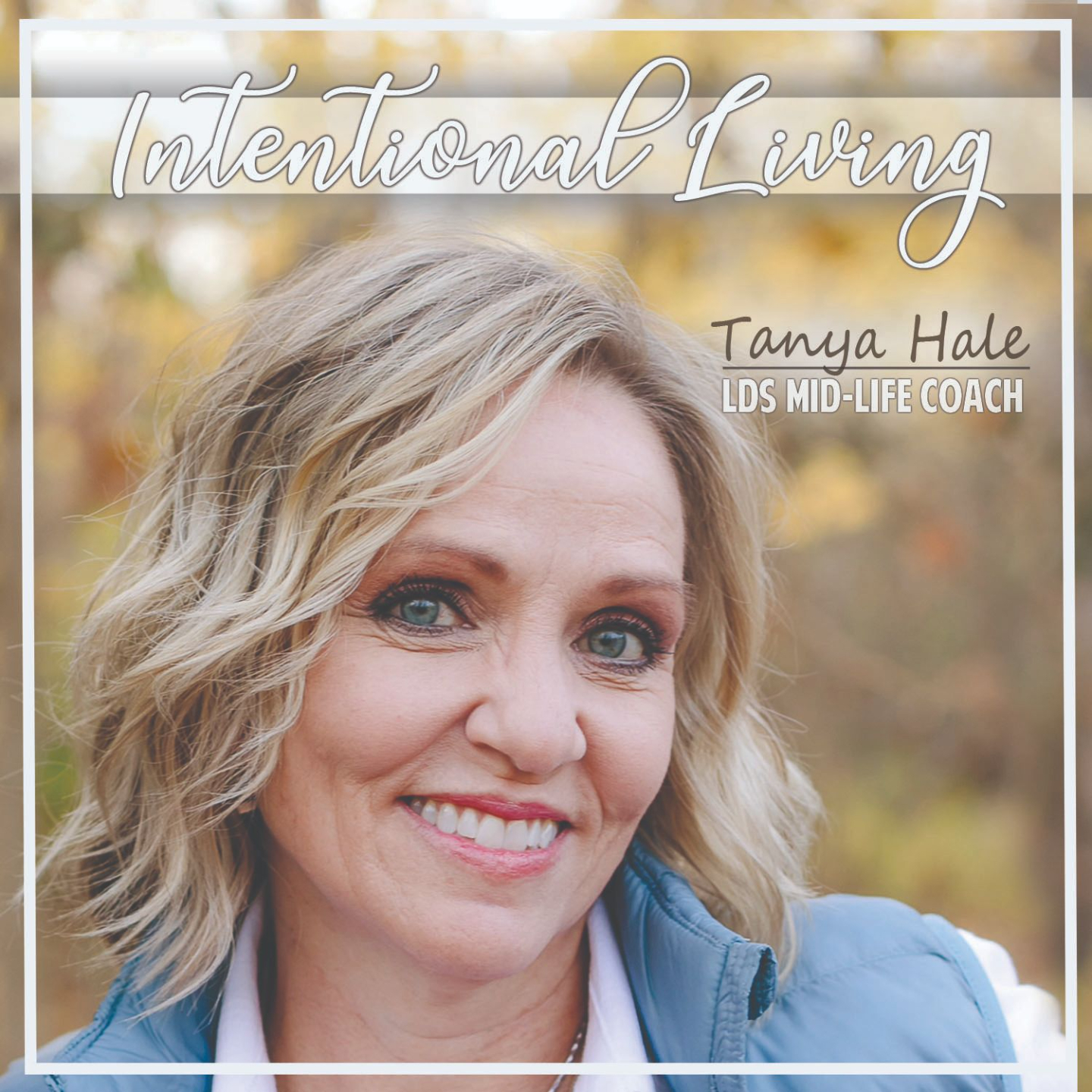
Tanya Hale 00:00
Hey there! Welcome to Intentional Living with Tanya Hale. This is episode number 393, "The Paralyzing Pursuit of Perfectionism." Welcome to your place for finding greater happiness through intentional growth, because we don't just fall into the life of our dreams...we choose to create it. This is Tanya Hale, and I'm your host for Intentional Living.
Tanya Hale 00:23
Alright. Hello there, my friends. As always, welcome to the podcast. I'm so glad to have you here, and I am always just so glad to be here. I love being able to share content with you that just has enlightened my brain, has helped me move forward into a better version of myself, working with the small nuances of changing how we engage with the world that just makes such a big difference. They may be small changes, but they impact our world in a very big way.
Tanya Hale 00:51
So before we jump in today with this conversation that I have with my friend Kathy about perfectionism, I want to remind you that I have two classes starting in January. The first one, Should I Stay or Should I Go, is going to be Monday nights at 7 p.m. Eastern. That's 5 p.m. Mountain. They start on January 19th, six-week class. This is for those of you who, okay, I've made it through the holidays, just been waiting for that to make a decision on do I stay? Do I go in this marriage? What is going on? I want you, if you are in this place, to be able to stand on solid ground. I want you to know that you are happy with your decision. I want you to have your back either way. I want you to have the tools to be able to show up the way that you want to in your marriage, in making the decision of do I stay or should do I go? It's probably the biggest decision you're going to make in your life. And this is going to be a really, really great class. And I want you to be there if you are in this place of trying to decide, do I stay or do I go?
Tanya Hale 01:56
And if you know somebody who is in this place, please send them to my website. This information can be found on tanyahale.com. You can go to my group coaching and those classes are up and ready to go, ready to register for. They're going to be really, really great.
Tanya Hale 02:12
The second class I'm doing is the Ultimate Date Night. This is for couples who are not in crisis, but couples who are like, listen, we want something more. We want to push the boundary here. We want deeper connection, deeper intimacy. We want to just get along better. We want to interact with each other in healthier, better ways. This is for you. This is going to be Thursday nights starting January 22nd, again, for six weeks. It's going to be 8 p.m. Eastern, which will be 6 p.m. Mountain. And again, we're going to be just helping you develop the tools within your relationship to create more of the kind of relationship that you both really want. So I would love to have you come to either of those classes if this is the place that you are in in your life. And this class is limited to four couples only.
Tanya Hale 03:09
And the should I stay or should I go is limited to eight people. I really like these classes small because I feel like we get to know each other better. We get to talk about things that just make our lives a little bit better and sometimes they're a little bit vulnerable. And so this gives us a chance to get to know people. I think as we've done these classes, by the end of the class, everybody's so grateful for the other people in the class and for how they've contributed to the overall understanding and depth and personality of the class. So would love to have you join us.
Tanya Hale 03:41
Also, the last thing, Talk with Tanya. The next one is on January 13th. Okay. That one is always at 2 p.m. Eastern. So that's 12 o'clock Mountain. It is just a free webinar for whoever wants to come, for whoever has questions about anything you want. We get some free coaching done and you get to watch other people get coached. It's always just such a great, great opportunity to get some free content and some free chatting with me. And I'm an open book. You can ask me questions about anything, my previous marriage, my divorce, my current marriage, my single years, my dating. It's all free game. And you can just bring your own stuff. We've talked about a lot about over the holidays. The last two talk with Tanya's have been a lot of how do I manage my adult kids over the holidays is what we did. So here we are, New Year's. Let's see what shows up for that. Alright, that is going to do it.
Tanya Hale 04:40
So I'm going to introduce you here in just a minute to my great friend, Kathy. I'll tell you how we know each other. And I think you're just going to love this conversation. This is a longer one for sure, but very, very great and insightful, I think, as far as perfectionism goes. So if you feel like that's an issue for you, you absolutely want this. If you don't think it's an issue for you, you may want to listen to it anyway, just to see, is there something that you're missing? Because very often there is. I think all of us find that we have some perfectionist tendencies somewhere. So hope you enjoy this conversation with Kathy. And again, if you like this conversation and want to learn a little bit more about it, make sure that you're checking out the show notes on whatever app you listen to so that you can find more podcasts that have to do with the same topic. Okay, enjoy the conversation. I'll see you next week.
Tanya Hale 05:37
Alright. So Kathy, so glad to have you here. Thanks for coming.
Kathy 05:42
Oh, so good to be here.
Tanya Hale 05:43
Okay, so let me introduce you all to Kathy. So Kathy and I have known each other for a lot of years. When I used to live in Utah before I got married to Sione and moved out here to Indiana, Kathy was one of my exercise partners. And I know that you've heard me talk about that on the podcast before if you've been listening for a while, but we used to exercise at 5 a.m. to 6 a.m. We'd go to the church and we'd do these great little workouts. But almost, if not more important than the workout, was the discussions that we would have. Along with our friend Jackie, we would just have these deep, beautiful discussions about life, about judgment, about sin, about, I mean, all the things. Like self-worth, judgment, you name it, we covered it probably in the several years that we were working out together. And so when I moved out here to Indiana, that was one of the things that I was like, oh, it's going to be so hard for me to leave these women that we just have these deep, beautiful discussions on such a regular basis. And so we decided to still get together. So most Fridays, probably at least three Fridays, two to three Fridays of the month, we have a Zoom call with the three of us and we just chat about things the way that we used to and we have such great discussions.
Tanya Hale 07:01
So anyway, this last Friday, Jackie ended up not being able to be there, but Kathy and I were talking and she shared with me a dream that she had had about something that she's been working through, which is some perfectionist tendencies. And I just thought it was so beautiful and so brilliant. And I was like, okay, Kathy, will you come on the podcast and just share it? And then let's just have a little chat about perfectionism because I think that we always have such great discussions. So Kathy is an LCSW, correct? And she works a lot with couples. And so you can imagine that a lot of our conversations revolve around a lot of the work that I do with working with divorces and difficult relationships. And she does a lot of the same stuff. And so though she's a certified therapist and I'm a coach, we cover the same territory and we talk about a lot of the same stuff and we help each other understand concepts and help build each other in the work that we do in the world. So yeah. How's that for an intro, Kathy?
Kathy 08:03
That's fabulous. Better than I could ever imagine. Thank you, Tanya. Oh, you're great.
Tanya Hale 08:09
Brilliant. I think you're going to love her insights today. So this is what we're talking about. I love that she just, as we were just prepping for this, she calls this the "paralyzing pursuit of perfectionism." And I love that, especially in the context of what she's going to share with us today. But perfectionism, tell us, I mean, you said that you were doing some work around perfectionism and then you had this dream. So what was the work and why were you doing the work around perfectionism? What were you noticing that had it on your radar?
Kathy 08:40
Well, I think I've struggled with perfectionism throughout my life. It's always been this common theme. And I've realized the more I'm able to be intentional and focus on particular things that I'm struggling with, I decided perfectionism was one of the things that I was really going to draw attention to in order for me to understand this concept a lot better and just go into some depth and see if I could make some movement and kind of burst through some of the things that held me oftentimes back. And I knew that just were not helping my life.
Tanya Hale 09:22
So you felt like you were in this stuck place, it sounds like, and that stuck you figured out was partially caused by your perfectionist standards.
Kathy 09:31
Absolutely. Yes, absolutely. And it was a huge theme. And so, I mean, much like with anybody doing any kind of work in their life, these themes start to emerge and you realize, oh, wait, this is really holding me back. This is really showing up in my life. And it's preventing me from having a richer, fuller life.
Tanya Hale 09:54
Yeah. Yeah. Let's go back to the beginning. When, when did you first, what is one of your first memories in your life about this idea about being perfect?
Kathy 10:09
Oh, well, I think that that's what the dream helped me understand was I remember being baptized and I remember that feeling of coming up out of the water and everybody, you know, the talk on baptism was about me being clean and me being pure and that I was sinless and I was the one that didn't have any sins, you know, in the whole congregation of all my family and friends. And so I felt a sense of being proud about that and watching my family and my friends and my community and my church, you know, the church people looking at me. And I was just, I was just filled with the sense of I never want to sin again. I never want to have that feeling of being impure.
Kathy 10:56
And I also remember this is back in the day where the confirmations happened on Sunday. So the baptism took place on Saturday, then you had the confirmations on Sunday, and it was right before the sacrament. And having, you know, the hands placed on my head and just the circle of men and again, community, church, my family, friends, all just gathered there for me. And so right after the confirmation was the sacrament. And I remember I thought to myself, I am never going to sin again. I am really in my cute little eight-year-old's brain and self, you know, so I tried to really focus taking the bread and the water and thinking about Jesus. And I thought the only thing I could do was just think about Jesus. And of course, you know, the day went on and, you know, it's so hard to just focus on one thing. And I think that was the beginning or buds of remembering that that feeling of being, I don't know, just, I think there was some splits inside of me that started to happen when I was trying to figure out how to integrate being perfect and being a kid.
Tanya Hale 12:10
Isn't it fascinating that a basic part of this thought for you was, I want to be good. I want to follow Jesus. I want to, you know, but it's so easily that that pure, beautiful thought gets muddied so quickly with so many of the other thoughts. Like people will be disappointed. You know, who am I if I can't stay clean? Like these self-worth thoughts start creeping in where we start identifying our worth as a person with how am I living? Am I never making mistakes? How are other people seeing me? Like it's amazing how quickly a beautiful thought like, I want to be clean, I want to do good, can get muddied with so much of this other stuff.
Kathy 13:00
Oh, for sure. Oh, for sure. 100%. I agree with you there.
Tanya Hale 13:05
Yeah. You know, I look back on my perfectionist tendencies and mine, I don't think really started when I was a child, although I do remember so much talk about being perfect at church and I think also in society. And I don't think it was just a church thing, but there was this idea in the 70s and 80s that really sticks with me that we are striving for perfection. And in my brain, I really kind of thought that, oh, perfection will happen in this life, probably by about the time I'm 50. Like it's just kind of what your brain thinks, right? And I really thought that perfectionism was an option in this life. And so it didn't impact me at such a young age as you, but I really just have these ideas that, oh, we'll get there. I'll get there in this life.
Tanya Hale 13:58
And then when I was a missionary, I remember my mission president used to just stress obedience, obedience, obedience so much. And my interpretation of that was, I have to be 100% obedient. I cannot make mistakes. I can't do this. If I want God to bless me, if I want to find people who are ready to hear this beautiful message of Christ and that I have to share, I have to be doing this perfectly. Otherwise, God can't work through an imperfect vessel, right? Was kind of how I did that. So I came back from my missionary experience being very, very uptight about not sinning and doing everything the right way. And really, that's when I started to implement my perfectionist tendencies.
Kathy 14:53
When I was on my mission, I was uptight. I remember after my mission, I lived with a bunch of my mission companions and they're like, you know, we could have done a lot more work if you were more relaxed like you are now. Because I believed my thought that I internalized was, this is the Lord's time. And so I didn't want to waste any of God's time. And so I was just very tight wound. And, you know, every second that went by, I remember sitting in a transfer and like, this is a waste of time. You know, we need to be out there. We need to be tracting. And it just created this sense of urgency and anxiety, basically, when I was a missionary.
Tanya Hale 15:33
Yeah. Which is interesting because as you say that, I just see all the connections that we make with people are not available to us when we are so uptight.
Kathy 15:46
Well, that's what I teach my couples. Yeah. And I'm like, when you're out of your social engagement system, which is when you're relaxed and you're in the wellness and growth, your body is in a nervous system that is allowing for connection. But when you start to go into your fight or your flight, the anxious part of you, connections can't be made. It's impossible. I tell couples, you know, do you get anything done when you're anxious, when you're in that fight, fight freeze? I'm like, just stop talking when you're there. Cool down and get into your ventral vagal nerve, which is your social engagement system.
Tanya Hale 16:25
Yeah. Yeah. You know, as I look at that concept in my previous marriage, I see where my perfectionism, which is so funny, made me so critical and judgmental. Because I offer connections. And then there's no connection either. And it's interesting that my being critical and judgmental makes me very imperfect.
Kathy 16:54
And then the circle is complete, right?
Tanya Hale 16:57
You know, there was no there was no connection in my own brain with this concept. Anyway, so tell me a little bit more about your journey, because you're now in your 50s like me. And tell me a little bit more about your journey over the years and how perfectionism has showed up and how it has impacted your life.
Kathy 17:17
I think a big part of it was, I think even being a parent, I think I've been plagued as a mother just consistently feeling like I'm not doing enough that, you know, fears behind what if my kids turn out this way because of who I am and the way I show up. I think in my marriage, I began recognizing lots of judgments, judgments about myself. And so that naturally spills over into my spouse, over into my kids, over into even my extended family. And just those thoughts have really driven a wedge and even wedge between them and myself. Just the consistent self-talk about what's wrong with me and how I need to improve and how I need to get better has been just really counterproductive for being able to be relaxed and be myself.
Tanya Hale 18:22
And for me, I see a lot of that going down out then on the expectations that I have of other people around me as well.
Kathy 18:29
Yeah. I believe strongly what the self-talk that you have is just who you're going to be outside. You know, so if someone's criticizing me or if I'm, you know, being critical of them, it's a direct reflection of what's happening internally.
Tanya Hale 18:49
Yeah. All right. So let's talk about you. I mean, the last little bit before you had this dream, like was, was anything specific really going on or was it just like a lot of pondering, a lot of thinking, a lot of processing? And then along came this really amazing dream that you shared with me?
Kathy 19:07
Yeah, I think in my own work, I decided I wanted to be very intentional. And intention was, you know, intentional living, right? We talk about that a lot. And I think that it had just culminated to a point in my life that I recognized perfectionism was really getting in my way of being the person that I wanted to be. And so I decided, yeah, I'm going to. So I started looking up mantras. I started looking up all sorts of, you know, thought experts on perfectionism and really tried to integrate them into a new way of thinking. You know, I talk to my clients all the time about neuroplasticity and how the brain can change, but with repeated and direct attention, that's how it's going to change. And so, yeah, I'm, I was all for just focusing on this concept and pondering it and thinking and just having all sorts of just, yeah, just in my waking life, wanted to bring it to consciousness.
Tanya Hale 20:08
Yeah. I love that. I think, I think what you, it seems like what you did was you just really prepped your brain. You let your brain know what problem you were trying to solve, how you were figuring it out. And I think that our brain works, works through stuff. And I think that God works through our brain, right? I think that He helps us. And so, so as when we have things like dreams, I think it is our brain, but I also think that that's a way that God talks to us as well and inspires us and directs us as well. I'm not usually a have a dream and remember it kind of person ever. So I'm always intrigued by people who have dreams that they remember and that are insightful like this. So anyway, why don't you go ahead and kind of share with us? I know that you wrote it down, but feel free while you're reading through some of your journaling experience, you know, to jump in and share anything else that you want to do. So, all right.
Kathy 21:05
Yep. So I found myself in this beautiful, stark, pure white space. And again, a lot of this is just images. So that's why I'm trying to, it's hard sometimes to translate the abstract into the language, but this is as best as I could do it. So I found myself in this beautiful, stark, white, pure space, and it was absolutely pristine. And as I stood there thinking about what to do, I noticed that I was paralyzed. I sensed, I deeply knew, that if I moved, I would somehow ruin it. I would leave a mark. I would disturb its perfection, and my body would not allow me to take a step in any direction. I was frozen by the fear that my presence alone would soil what had been untouched.
Kathy 21:51
And then I noticed behind me was a total blackness. I didn't need to turn around to know it was there. I felt the instinctive fear that comes with darkness, the inability to see and the unknown. I also understood that if I moved toward the white while knowing the black existed, I would drag it with me, creating a channel for darkness to seep into the light. And that knowledge kept me stuck. The stuckness felt familiar. It brought me back to my earliest memory of it, my baptism. I was told I was spotless and sinless in that moment. I remember looking at my family and the people from church. They were beaming at me, smiling with pride. As an eight-year-old, I vowed I would never sin again. The feeling of being seen that way, pure, good, and worthy, was one of the best feelings I had ever experienced.
Kathy 22:42
So just as a little background, I grew up in Minnesota and I served my mission in Alaska. So I think the next part just came from, you know, having those images. So I said, I recalled images of snow and walking on fresh snow. When you step down and the snow compressed, but there's no dirt, no tracks, no damage, just snow. The fear contamination wasn't happening. So I started to walk towards the light. So I think that once I had that sort of image of what I'd experienced before, so I started to walk toward the light. And I noticed my footprints appeared, but they didn't leave a mark. And I realized I wasn't leaving a dark imprint after all. And, you know, sometimes even snow, sometimes it'll uncover like the dirt underneath.
Kathy 23:24
So I think that this also crept into my consciousness. But I said that realization made me curious and I began to explore the white space and I slowly felt safer. My body relaxed. I sensed in that moment, I sensed that my movement was not only allowed, but welcomed. I no longer feared spoiling the space. But then I noticed I could tolerate maybe a little bit of darkness entering into the white. And when it did, something unexpected happen. It was beautiful. And I remember this feeling of just being surprised and taken back and a little shocked. The contrast was striking. The dark created lines and shape that felt alive and interesting. I saw that the darkness wasn't actually black, but it had layers. It had like different lines with gray and with, you know, just the different shades of them. And I realized that keeping white completely separated from the dark made it feel lifeless and dull.
Kathy 24:25
And I really did notice that is that there was all of a sudden this life that started to come to life. And it says, as they blended, they formed shapes and images, like a sketchbook drawn in graphite or charcoal. Familiar feelings and forms emerged. And I understood then that my stuckness had come from a fear of desecrating perfection. Yet here was imperfection creating something meaningful. Marks were being made, but they refined the space rather than ruining it. There was a piece in that. That was a huge shift for me. It was just, oh, wait a minute. Hey, maybe I'm thinking about this all wrong.
Kathy 25:06
And then I noticed that there was this space, that space that I was in, it started to create like the hands of a clock. And with each tick of the minute hand, so you know how it goes, it moves, right? New lines started to form, started to form. And light flowed into dark and the dark into the light. Seamlessly, the feeling was flow, loose, natural, alive, the opposite of that tightness and stagnation. And I just remember feeling there's no urgency, there's no panic, and just watched as time was unfolding and the creation was happening. And I guess earlier that day, I'd just been organizing my scrapbooks. And so the images of my scrapbook started to appear. So images appeared like a scrapbook of my life, moments layered over moments. And as the images shifted, so as the minute hand was shifting, the images shifted. I realized I could move freely between the light and the dark. Both were necessary. And it wasn't either or. It was both. Together, they created depth, novelty, and meaning. And some images, some images were striking, some were ordinary, and that was okay.
Kathy 26:22
So yeah, I mean, I just noticed that it was, as each time minute passed, there was, there was differences and there were changes and it had all evoked all sorts of feelings, you know, feelings of, oh, this is just an ordinary day. You know, of course, there were moments and memories that were amazing and awesome, but it just really let go of any kind of judgment about whether it was okay or not. It was just all accepted. All parts of my life was accepted. Said, what changed most was my fear of ruining the blank slate. Each passing moment altered the image. I felt entirely at peace with that. Letting go of perfection allowed me to simply witness what was. My tolerance for mess, chaos, and wildness grew. The pressure to be right or correct just melted.
Kathy 27:14
And then I remember afterwards just thinking, oh, wait, there's no color. I think, or actually thinking, I was like, oh, there's really no color. And I felt a little bit sad. But again, it was that gentle acceptance. And I remember just crying in relief. I knew a shift had happened. My sense of self felt stronger and more integrated. So I talked a little bit about feeling very, very fractured in my life, throughout my life. And just this moment was a moment of me just integrating all parts of myself. Confidence rose naturally. I began creating my own space, my own pattern, shapes, images, and memories. Nothing had gone wrong. There were no mistakes. I was creating and the process itself was alive and beautiful. There was no longer any need to remain stuck, paralyzed, or afraid.
Kathy 28:13
And I think I mentioned to you, I said, since that dream, I have not had a problem with perfectionism. It was a total shift of my perspection, my perspective. And I recognized, oh, I've been looking at this through a lens that was not true, was not helpful, and really did impede and impair my life.
Tanya Hale 28:42
So if you were to summarize all of that and what you learned into one sentence, what would you say? Maybe two sentences if that's it. Maybe two sentences.
Kathy 28:52
Well, I think it goes back to the mantras that I'd been working on. I choose progress over the paralyzing pursuit of perfection. I think that's what you're talking about. I trust the process of life and surrender to its natural flow. And that's the feeling of flow. And I've heard so much about the importance of flow. And yeah, I just see life less, you know, choppy and more of just creating a flow. And that feeling of flow just feels very peaceful and very, it makes me feel alive.
Tanya Hale 29:32
Yeah. I'm struck by the sense of how in your dream, when you let go of the perfectionism, when you, when you allowed for the darkness, how you also found your confidence, you found your strength. You found you. In that, right? It was a space of self-discovery, it seems like to me, like this place of, oh, now I understand who I am. Now I understand what I am capable of creating in this life when I'm not so strict and rigid on something that's, that is not even obtainable anyway.
Kathy 30:16
Right. And it was impeding my creative process. And I recognize I'm a creator. I mean, naturally, through, you know, being a woman, just recognizing and hearing that you're a creator, you're a creator and just more and more just being like, oh, wait, this is impeding my creation, my creative process, and who we are as human beings are creators.
Tanya Hale 30:44
Yeah. I love all of that. I just, I thought it was just such a beautiful, beautiful analogy about how, you know, if we go back to the Plan of Salvation, like God sent us to earth as humans. Yeah. Humans, not as perfect beings, knowing that we would make mistakes. And there is not one thing in this world that is perfect. Everything on this earth life, from the moment it is created, is in a state of entropy, right? It's already started to break down and to move toward death. And everything does that. And I just think it's fascinating when we let go of this idea that we're supposed to be perfect and really start embracing the idea that the mistakes are all part of the growth process. It's part of how we move forward. I think that that's just so valuable to get to the point where we can really accept that and embrace it and just go, oh, then I'm supposed to make mistakes.
Kathy 31:54
Yes. And I think we defined, especially in our call, about this idea of healthy guilt versus unhealthy guilt and how, yeah, I mean, mistakes can be defined in two ways. One is a moral failing and that's the ones we want to be able to pay attention to and really draw attention to making some changes, making restitution. And that transforms us. But I think so much more, I think that we have this unhealthy guilt, which is we've, we've ascribed or we've attributed and we've put a connection to things that are not morally wrong, but we say, I feel so guilty for this, but it's not morally wrong. And so I think when I get tripped up in that, it's, yeah, I don't think that that's very helpful. And I think that's part of my life is that I've just attributed a lot of things as morally wrong and that I, that I am wrong and that I need to somehow repent of being human.
Tanya Hale 33:00
Yeah. Yeah. So I love that in our conversation the other day that the healthy guilt is stuff that really is going to progress us and move us forward over and and guilt over real moral failings. Like real issues that are really harmful and hurtful. Unhealthy guilt is like if I show up 10 minutes late for a lunch date or something, or if I forget somebody's name, right? Like beating ourselves up for minutes or days or, you know, we over something small like that. It's not a sin, so to speak, right? It's just a foibble.
Kathy 33:41
Yeah. And I've tried to apply the same principles of, you know, say I'm sorry and apologize and try to make restitution. And sometimes that really doesn't bring relief. And I have found that the only thing that brings relief in those moments is to be able to separate, wait a minute, this is not healthy guilt. This is my attributing that what I've done is morally wrong and it's not. And so self-compassion has been the only antidote for my unhealthy, guilty feelings.
Tanya Hale 34:18
Yeah, I love that. I would dare say that self-compassion is also the antidote for even healthy guilt.
Kathy 34:26
Oh, for sure. Once you've done your work. Yeah, once you've done the work.
Tanya Hale 34:30
Yeah, for sure. I was listening to a podcast last week and I don't even remember which one it was, but one of the thoughts that came out of that that was so brilliant for me was this idea that the mistake is not the sin. We are going to make mistakes. We're going to say hurtful things. We're going to do hurtful things. We're going to be dismissive. We're going to be unaware. I mean, the mistake is not the sin. The sin is not acknowledging the mistake, not cleaning up the mistake, not circling back around and addressing the mistake with the people that we have hurt. And I love, and is that true doctrine? I don't know. But I love the idea that, listen, of course we're going to make mistakes. That's part of the whole plan. That's part of how we figure it out. The way we figure out how to balance on a bicycle is by not balancing on a bicycle, right? And that's how we eventually get the feel of, oh, this is what it feels like to be balanced, you know? And it's that following that helps us figure out what to do. And so I'm not saying that there aren't things that we do that we don't want to repent of, but, but what if we started looking at it in that, it's okay that I make this mistake. Of course I made a mistake.And how do I want to clean it up? How do I want to move forward from here? How do I want to use this as a stepping stone rather than a bludgeon to beat myself up with?
Kathy 36:08
You actually bring up this point that I think we've been talking about is there's been a rise in parental estrangement. And what's happened is, is that was I'm talking to both sides, both the parent and the child. You know, the child's being like, well, I talked to my parents about how this has hurt me. And they said, well, that doesn't, that didn't happen. Or you're remembering it wrong. Or they'll say something to the effect of, you know, it wasn't that big of a deal. But to the kid, it was. And then on the other side, the parent saying, I don't understand where this is coming from.
Kathy 36:40
So we talk about this idea of, you know, the idea that we wake up in the morning. We don't ever think we're going to go hit somebody with our car. We never had the intention. But nevertheless, when we're on the road, I mean, there's, it increases the likelihood of us just bumping up against each other. And so in that moment, when there's an accident, you don't, you would be appalled if the person that, you know, had the accident or caused the accident said, oh, well, I didn't mean to. Oh, sorry, that wasn't. I didn't wake up this morning meaning to. That's, that's not helpful. So in the moment, you know, we need to acknowledge the possible damage from their perspective of how it was. You know, you might have made the person late now that they have to go and do some car repair. Now that, you know, they might have caused a bad mood and they came home and, you know, they yelled at their kids. So there's ripple effects that happen that we may not intend.
Kathy 37:42
But yet I think, again, like you're talking about, what helps to move us forward is that acknowledgement, that taking responsibility. And if the other person says, I feel very hurt, then yeah, believe them. That's from their objective reality and allowing yourself to move into that space with them and not argue with them.
Tanya Hale 38:05
Yeah. I've heard that referred to as intent versus impact. Like, okay, I didn't intend to do that, but the impact of my behavior was, you know, fill in the blank, right? Like this recognizing and acknowledging the impact of my behavior, even though.
Tanya Hale 38:21
So that actually like reminds me about like at the beginning of our call when we were talking about how when I see myself and feel all of this pressure and angst around having to be perfect, it actually brings up very imperfect behaviors in me. I start judging, I start criticizing, I might start attacking, right? All of these things that are very unhealthy in our relationships. And so it creates in us this dichotomy. Like I want to be so perfect, and yet then I just start behaving in such imperfect ways and destructful and harmful ways that actually disconnect us from other people.
Kathy 39:03
Well, and with that disconnection, a disconnection from ourselves. And I think I've noticed there's times where someone may have said, hey, this is the impact. And because I just can't fathom that I would be that type of a person, you know, then I start the argument. No, I didn't. No, you know, I never did that. I never said that. And yet it drives that disconnection, disconnection from others, disconnection from myself. And that really creates that space of, again, full circle around, oh, I guess who I am is a sinful, bad person. And it doesn't doesn't help with connection with myself. It doesn't help connection with others. And it just perpetuates the problem.
Tanya Hale 39:52
Which is interesting because I think our more shallow mind would look at perfectionism and think that that's going to push me to a higher level. Actually, the perfectionism drags us down into judging others, judging ourselves, not being willing and able to see our own frailties and mistakes, right? Because we have this idea of perfectionism in our head and we push so strongly for that sometimes.
Kathy 40:23
Well, and I think remember talking to you about how one of my intentions was self-worth and my recognition that when I started working on my own sense of self, when I was good with myself, whenever I received any kind of feedback, I remember the day where my husband, you know, gave me some feedback on myself, and I was able to take it. I was able to be like, hey, thanks for letting me know, rather than just go into this place of flogging or even just denying what he had seen. But because my self-worth, my sense of self was intact, I could hear, you know, what he wanted to talk about, how he was seeing me. And I was able to receive it really well because myself wasn't being attacked. It's just what I was doing, what I was bringing, my behavior that was bringing to the relationship. And I felt no need to defend myself. I'm like, yeah, you're right. You're probably right.
Tanya Hale 41:19
I love that because it brings back this idea as well that a healthy sense of self is also embracing our imperfect self. Not that we have to say, you know, celebrate it to the point where we're like, woohoo, I'm never going to change. But we do want to say, listen, this is who I am. It's where I am. And I know I have a good heart. And I know that I want to do better in the future. And I'll figure it out, right? It's that space of movement rather than this rigid, I'm perfect. And if I'm not perfect, then I'm horrible and going to hell, right? Like it's black and white, one or the other thinking that really is a challenge for our sense of self. And our sense of self has to be able to embrace our greatness and our struggle. You know, it has to be able to see both sides and say, oh, I'm good sometimes and I'm bad sometimes. I'm a great mom sometimes and I'm a horrible mom sometimes. I'm, you know, and being able to really just embrace that wholeness of who we are. But that wholeness cannot be seen or accepted or anything until we let go of the perfectionism.
Kathy 42:35
And that was the big part of the dream was this, the feeling, the sensation, of integration. I just really felt integrated. I was no longer either or. I was not, you know, either I was perfect or I wasn't perfect. It was everything was integrated. That's who I am is both the black, both the white, the gray, everything in between and what I'm creating.
Tanya Hale 43:00
And nothing has gone wrong here.
Kathy 43:02
And nothing had gone wrong. Matter of fact, it was beautiful.
Tanya Hale 43:06
Yeah. Yeah. And that's the piece that I love so much is when we embrace that, it is beautiful and we open up the capacity to create more, to grow and progress more. So, so really quick, as we kind of wrap this up, I have some quotes from Brene Brown about perfectionism. And I just want to share some of these and maybe we'll have some thoughts about them as we go through. So I've got five thoughts, five quotes that she's given.
Tanya Hale 43:39
She says, this is probably her most favorite, famous one that I really love. She says, "perfectionism is a self-destructive and addictive belief system..." Isn't that a fascinating word to use with that addictive? "..that fuels this primary thought: if I look perfect, live perfectly, and do everything perfectly, I can avoid or minimize the painful feelings of shame, judgment, and blame." Anything come up for you?
Kathy 44:09
Ah, just the fact. And I think she talks about shame, that it requires three things: to keep secret, to keep silent, and, you know, to in judgment. Those are the things that keep us in shame. And so just the thought of, yeah, we just struggle to, yeah, I think it's just paralyzing. That's all I can say. Yeah.
Tanya Hale 44:34
The word that stood out to me, and I stopped it for this one, was the addictive. These perfectionist ideas are addictive, right? That kind of struck me.
Kathy 44:47
Yeah. It's that feeling of, well, especially when I kind of split from myself, you know, I sometimes get this feeling of, look at how great I am. Again, it's that inflated sense of self versus the solid sense of self.
Tanya Hale 45:04
Yeah. Yeah. The other piece of this that I love is it helps me realize how fear-based perfectionism is. Perfectionism is not based in love. Perfectionism is based in fear.
Kathy 45:21
So I talk about that there's these two systems in our body. They're always competing. The first one is connection. We're hardwired for connection, for attachment. We really, we're tribal thinking in order for our survival. But then the other one is safety. And so when we don't feel safe, that will always overpower any kind of connection. And so, yeah, fear-based feels like, hey, I am at least preserving myself. I'm going to stay alive. Because if I come from a place of fear, absolutely. I have this false sense of ability to be able to stay safe.
Kathy 46:00
And again, I talk with my clients all the time. I'm like, okay, well, there's alarms that go off. And is this the fire alarm? 'Cause there's a real alarm or is this a smoke detector? Because you both, you burnt your toast. You have to be able to tell which one is it. Yeah. Is this really about safety or is this about just the perception of safety?
Tanya Hale 46:20
Yeah. Being uncomfortable. Something that's good for us. So here's her second quote. "Perfectionism is armor. It's not internally driven like healthy striving. It's externally driven and fueled by 'what will people think?'"
Kathy 46:39
And that just drives. I can't believe how much my armor has that protective part of me. And in the name of boundaries have actually been more walls. Yeah. They haven't really been boundaries. They've been walls. And it's in the name of protection. And that has always driven disconnection from myself. Again, that inability to be able to be integrated and this protection against others.
Tanya Hale 47:09
Yeah. Yeah. And this constant awareness of what are people going to think. And I think it's really hard to get out of that as a human because of that tribal mentality that we all have, like needing to be part of the tribe and needing to fit in. But being aware of it and saying, how is that thought driving how I'm showing up in the world? Is it, you know, and I think I found for me that as my sense of self has strengthened and grown over the years, that, yeah, I don't want to hurt people. And of course, we always kind of want to fit in a little bit. But I also am able to stand in this place that says, and it's okay if they don't agree with me. And it's okay if they have a different opinion. And it's okay if they don't like this aspect of who I am or how I am. Because I feel in alignment with me. And I feel this place of, gosh, you know, at my core, I'm a good person. That doesn't mean I do all the things right. It doesn't mean that I even implement all of the tools that I talk about on this podcast perfectly all the time, because that's absolutely not the case. But I know that I'm going to circle back around and I'm going to hit it. I know that I'm going to do my best to clean up my messes. And I think that that is the brilliant counterpart to this perfectionism is this place that says, listen, I'm a human and I'm going to circle back around and clean it up. Of course, I'm going to make mistakes and I'm going to deal with them in a healthy way that moves me forward.
Kathy 48:42
I don't know if this is really off topic, but something that's come up for me is I have a group that I, you know, with other therapists and we just talk about cases. And I was talking about, you know, a client that I struggled with, just how the inability to be able to just see themselves or take responsibility, or there's just a lot of resistance. And we talked about this idea of what's underneath all of that and talked about this idea of disgust and how primal, I didn't realize this, how primal disgust is. And disgust happens, especially when we're very young. You think about how a young kid needs to know, and I'm thinking about inside out, of course, you know, about whether the food's rotten or, you know, in order to keep yourself alive, but also disgust for other people's behavior, you know, disgust for our behavior. So it helps keep us, basically keep us in line from a very primal perspective, what's going to keep people in the tribe and what's going to get people kicked out.
Kathy 49:48
So I think, again, that lines up with the perfectionism is sometimes we can go a little bit overboard on the disgust with ourselves and with our behavior and with other people's behavior. But I really do think that there is an underlying primal experience that's happening, which is I want to be able to keep in my tribe. I want to make sure that I'm surviving and that I have people around with me to be able to protect me. So I got to protect myself.
Tanya Hale 50:18
Right. And if they're, if I never do anything for them to be unhappy with me because I'm perfect, then that protects my place. That feels very protective. And yet from the inside, it's eating us alive.
Kathy 50:34
Well, it's again, that's back to that circle of control, what I have control over with what I don't. And I think that there's an illusion of control that, oh, if I'm just perfect. I think it's happened so much as a kid, you know, if I'm just perfect, then I'm going to be able to elicit this kind of response. And when it doesn't, I throw a temper tantrum.
Tanya Hale 50:56
Well, and I think that goes back to like my previous marriage. I always just thought, if I'm perfect enough, then he'll love me. Yeah. And I spent so much time, like when people say, oh, you're so good at this stuff. I'm like, that's because I work really hard on being perfect and trying to earn his love. And I thought, if I'm a good enough cook, if my house is clean enough, if it's decorated well enough, if I'm a good enough mom, right? And it really just created a lot of dysfunction in my life.
Tanya Hale 51:25
So here's the next quote. And this one kind of goes along with the other one where she says perfection is armor. She says, "perfectionism is a 20-ton shield that keeps us from being seen." That's so true. Like, if I only show people my good, then I'm not being known by anybody. And the process of real connection with people is them knowing who I really am.
Kathy 51:56
Yeah, I talk to my couples a lot about seeing protection and connection on this continuum. And you're always making these judgments about where do I need to go into more protection? When do I need to go into connection? And oftentimes my, I think I see more often people tend to default to protection. And I really do believe protection is needed when there is a definite abuse or when there's the things that are being hurt. But I think sometimes we use that 20, you know, 10 times shield as a way of saying in the name of protection. But in reality, you know, I say, hey, when the behavior changes or when there's an apology, you know, soften that shield, soften all of those things and move more into connection rather than, you know, carrying around this armor thinking, oh, I'm always going to keep myself safe.
Tanya Hale 52:55
Yeah. Yeah. I talk to my clients a lot about how our brain is always constantly scanning our environment. Am I safe? Am I safe? Am I safe? Am I safe? And most of the time, we really are safe. I mean, there are occasional instances in my life where I could say, I was in some serious danger here. But on a day-to-day basis, even a weekly, monthly basis, I'm always safe. Yeah. Might it be uncomfortable? Yes. Might I need to show people my weaknesses and who I really am? Yeah. And is that uncomfortable? Yes. But is it dangerous? No. And so when we try going, when we're talking about in our relationships, going into these healthier behaviors that are super scary sometimes with vulnerability, this even validating our partner, all of these things that can feel so scary, being able to just say, but wait a minute, am I safe? And really answer that question. Yes, I'm safe. Yes. Let me do it. I'm really not in danger by being vulnerable here or by validating them or by sitting down and seeking to asking questions to understand their point of view and me not getting to share mine. I'm still safe. I'm not in danger.
Tanya Hale 54:20
And emotionally long term, that may not be a place where we want to stay in a relationship if that's the consistent pattern. But even then, I'm still safe. I'm just collecting good data. I'm collecting data to make a decision later on, but I am safe. And I just think that's just such a powerful question to really come back and ask ourselves. Like, am I safe here? Do I need this 20 ton shield?
Kathy 54:51
You know, I teach a lot of my couples. I mean, and this is across the board, Gottman, Terry Real, I mean, any one of the couples therapists, they always talk about with conversations, it has this common theme, which is you start with your vulnerabilities to create a safe space. "I feel. This is the story I made up about it. You know, for me, this is how I saw the experience," and really owning that, you know, you do create some vulnerability, but vulnerability is the birthplace of the relationships. We start with the whole like, "you did this and you did that and you caused this for me." I mean, we're just going to get defensiveness from the other person and it's not going to drive the connection.
Tanya Hale 55:42
Right. Right. Okay. Here's her next quote. "Perfectionism is not the same thing as striving for excellence. Perfectionism is not about healthy achievement and growth. It's a shield." I'm going to share the next one because it kind of goes along. "Perfectionism is not self-improvement. Perfectionism is at its core about trying to earn approval and acceptance."
Tanya Hale 56:07
So let me share with you one other thing that she had that I that I found that where she defines between perfectionism and healthy striving. She says, "perfectionism is other-focused. 'What will people think?' It avoids judgment. It hampers achievement. And it's linked to anxiety and depression. "
Kathy 56:29
100%. Yes.
Tanya Hale 56:31
And she says "healthy striving..." which is what both of us are working with the people that we work with to help them do, right? Let's just, let's just embrace our humanity. Let's just keep working towards becoming a better person. But this is what Brene sound, Brene says. She says, "it is self-focused, meaning I want to be the best I can be. It is about growth and allows for messy, imperfect progress."
Kathy 56:59
So, yeah, the thing that pops up immediately is, I think Terry Riel was talking about in the book, "I Don't Want to Talk About It in Male Depression" and how male depression is often driven by the messages that you need to achieve. What you've accomplished, what you've been able to acquire is all about your self-worth. And so it's never about just because you exist as a whole human being, you inherently have worth. No, it's, it's again, that hustle. The word comes to my mind. It's hustling for other people. Hustling for your worth.
Tanya Hale 57:42
Yeah. Yeah. And we're looking for that worth in other people. And that's completely dependent upon others. Yeah. And that's what Brene says here, the perfectionism is other focused. Healthy striving is self-focused. Right. We're not needing other people's approval for how we're growing, where we're growing, what we believe, how we see ourselves, any of that. We just are able to look inside ourselves and say, is this in alignment with who I want to be?
Kathy 58:11
And our true sense of self comes from that internal dialogue. Yeah. Internal, yeah, recognizing, yeah, I want to be able to improve. And, but it's not for others. It's really for our sense of self. Yeah.
Tanya Hale 58:27
Yeah. Gosh, that sense of self. So foundational to all of you.
Kathy 58:31
So foundational. Yeah. And it, and it comes by taking full responsibility.
Tanya Hale 58:36
Yeah. Yeah. All right. That's a great conversation, Kathy. Okay. So all of y'all out there listening, do you see why I love to have conversations with Kathy? Why so many Fridays we get together and just, we just meet over Zoom for an hour and we just chat because we have these kinds of conversations every single week that we do this. And it's just, I always walk away having learned something, understanding something at a deeper level. And it's just a brilliant place. So I attribute a lot of my growth to these morning conversations.
Kathy 59:12
They've just been fabulous, just wonderful.
Tanya Hale 59:15
So yeah, for me too. Thanks, Kathy, for coming on today.
Kathy 59:18
Tanya, thank you.
Tanya Hale 59:19
Okay. So just as I'm going to close this up, I just want to remind all of y'all, if you want to learn a little bit more about these concepts, go to the show notes on wherever you're listening to your podcast and scroll down and I will have several other podcasts that you can listen to that will talk a little bit more about these concepts and the things we're talking about. You'll hear probably some similar stuff, but you'll also hear a lot of other things that will help you build a more full and complete idea and understanding of what we're talking about. And again, this work is life-changing. I cannot, cannot say that. I was thinking the other day, like I could never have imagined living the life that I'm living right now. And I 100% attribute it to working with my coaches and the work that I, the self-coaching that I do, and just how I surround myself with content that builds me and strengthens me.
Tanya Hale 01:00:16
And if you feel like this is your time, this is your year to figure this out and to get your life on the path that you want it to be on, I highly recommend go to my website, tanyahale.com, go to that free consultation, set up a 90 minute coaching call. I will coach you and then we will also talk about what coaching looks like working with me on a one-on-one basis. So just, it's brilliant work. And I promise you, you will make faster and more meaningful progress in three to six months working with me than you might in two or three years on your own. Just because having somebody else see the patterns and show you your thoughts is such a powerful, powerful tool.
Kathy 01:01:00
So, okay. I agree. I wholeheartedly endorse you, Tanya.
Tanya Hale 01:01:07
Alright. That's going to do it for me today and for Kathy as well. Thanks again, Kathy, for joining us. Have a great, great week, my friends, and we'll see you next time. Bye.
Tanya Hale 01:01:18
Thank you so much for joining me today. If you would love to receive some weekend motivation, be sure to sign up for my free "Weekend Win" Friday email: a quick message to help you have a better weekend and position yourself for a more productive week. Go to tanyhale.com to sign up and learn more about life coaching and how it can help you get to your best self ever. See ya.